

The table of content
Introduction: The Complexity of Modern Energy Markets
The modern energy landscape presents a significant coordination challenge for asset owners. Operators must navigate fragmented markets defined by sharp price swings, diverse Power Purchase Agreement (PPA) structures, and complex grid-balancing rules. In this high-stakes environment, traditional rule-based dispatch for Battery Energy Storage Systems (BESS) has become a bottleneck, often failing to react to market changes and leading to unnecessary equipment wear.
Infinity Technologies addresses these challenges with the AI Portfolio Dispatch & BESS Optimization Engine. By replacing static rules with a technology stack featuring Reinforcement Learning (RL), price forecasting, and Digital Twins, the system automates optimal real-time charging and discharging. This "degradation-aware" approach explicitly calculates the cost of battery wear before every move, turning energy storage into a proactive profit driver that maximizes revenue per MW and improves the project's overall Internal Rate of Return (IRR).
Smart AI-Driven BESS Portfolio Optimization & Market Execution
Predictive Intelligence&
Portfolio Synchronization
Effective management of a diverse energy portfolio demands a unified operational view that connects high-level financial goals with the practical limits of each asset. The platform provides a centralized command center that forecasts energy prices and load patterns, allowing the system to optimize battery charging and discharging cycles. This coordination ensures that bids across different markets—each with its own volatility, PPA structures, and balancing rules—are executed to maximize EBITDA while keeping a clear 7-day operational plan. Rather than acting as a static reporting tool, the system provides a dynamic link between market opportunities and physical asset availability.
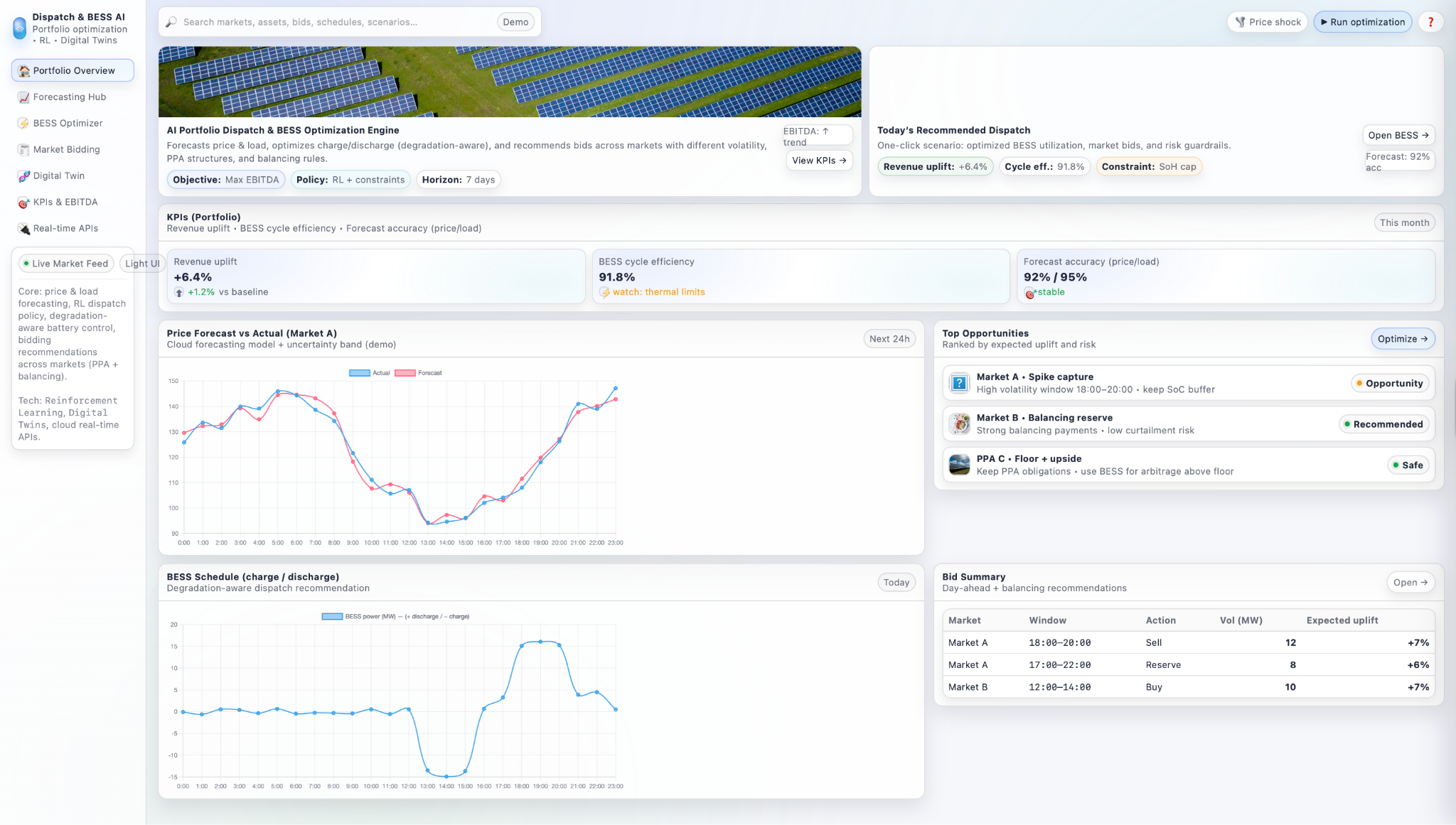
The engine translates complex market data into actionable intelligence, such as a "Today’s Recommended Dispatch" scenario. This automated workflow enables one-click execution of BESS utilization and market bids, significantly reducing the manual effort required to manage multiple assets. By maintaining high precision in its operations, the system has demonstrated the ability to deliver a +6.4% revenue uplift over baseline operations while maintaining a BESS cycle efficiency of 91.8%. These results highlight the engine's capacity to squeeze more value out of existing hardware without increasing operational overhead.
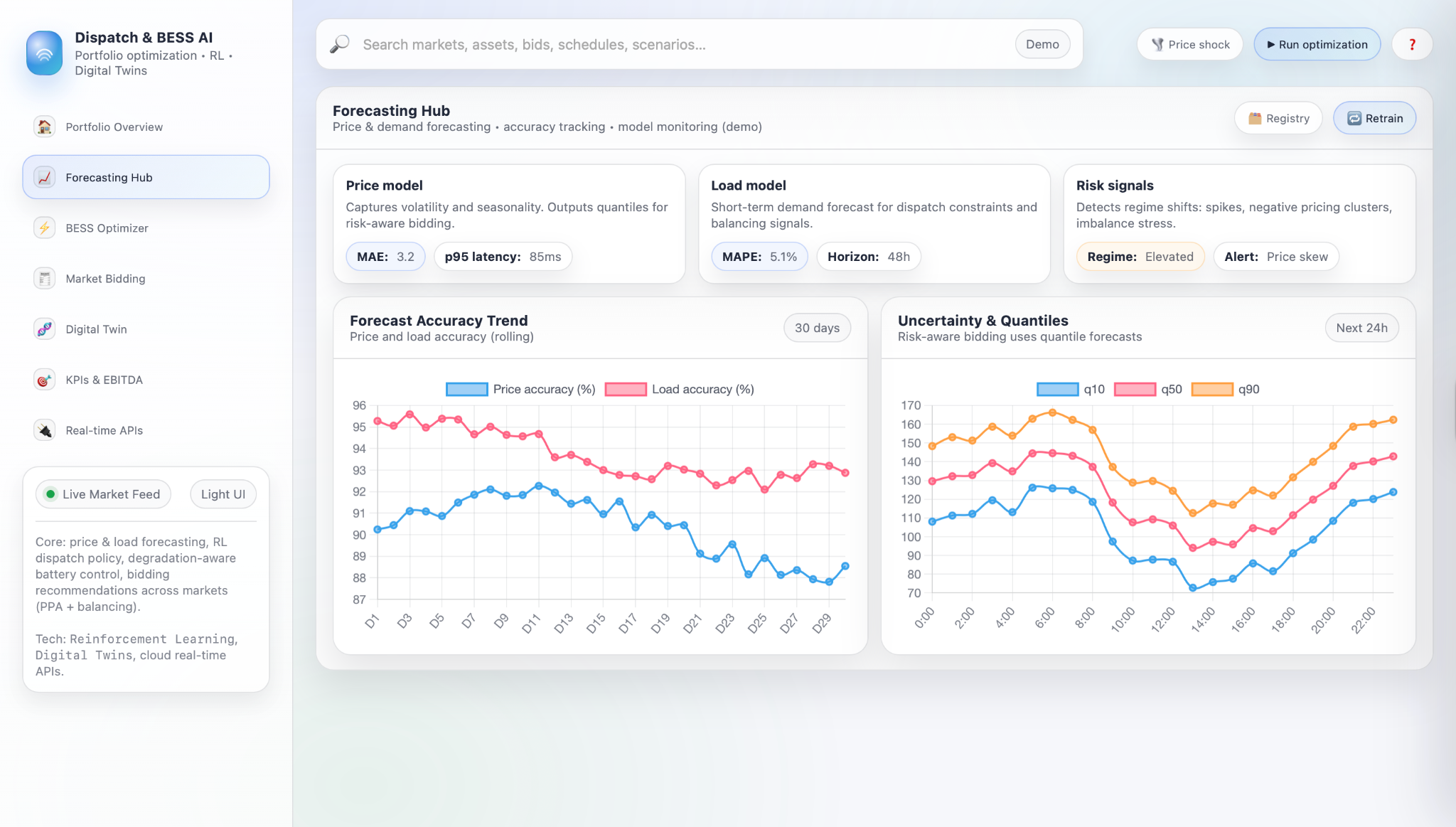
At the core of this optimization is a sophisticated Forecasting Hub designed to handle the risks of price and demand swings. The system uses "quantile-based" models (represented as q10, q50, and q90), which predict a range of possible outcomes rather than just a single number. This probabilistic approach allows for risk-aware bidding that accounts for uncertainty, helping operators decide how much capacity to commit in volatile markets. These models are sensitive enough to detect major regime shifts, such as sudden price spikes or clusters of negative pricing, which are critical for protecting the portfolio from downside risk.To ensure these decisions are reliable, the system continuously tracks its own performance, maintaining a forecast accuracy of 92% for price and 95% for load. This high level of accuracy allows operators to participate confidently in high-volatility windows where the potential for profit is greatest. By identifying top opportunities, such as "spike captures" in specific markets, the engine recommends a strategy that balances aggressive bidding with the need to keep enough energy in reserve for lucrative balancing calls.
Asset Longevity&
Market Execution Strategies
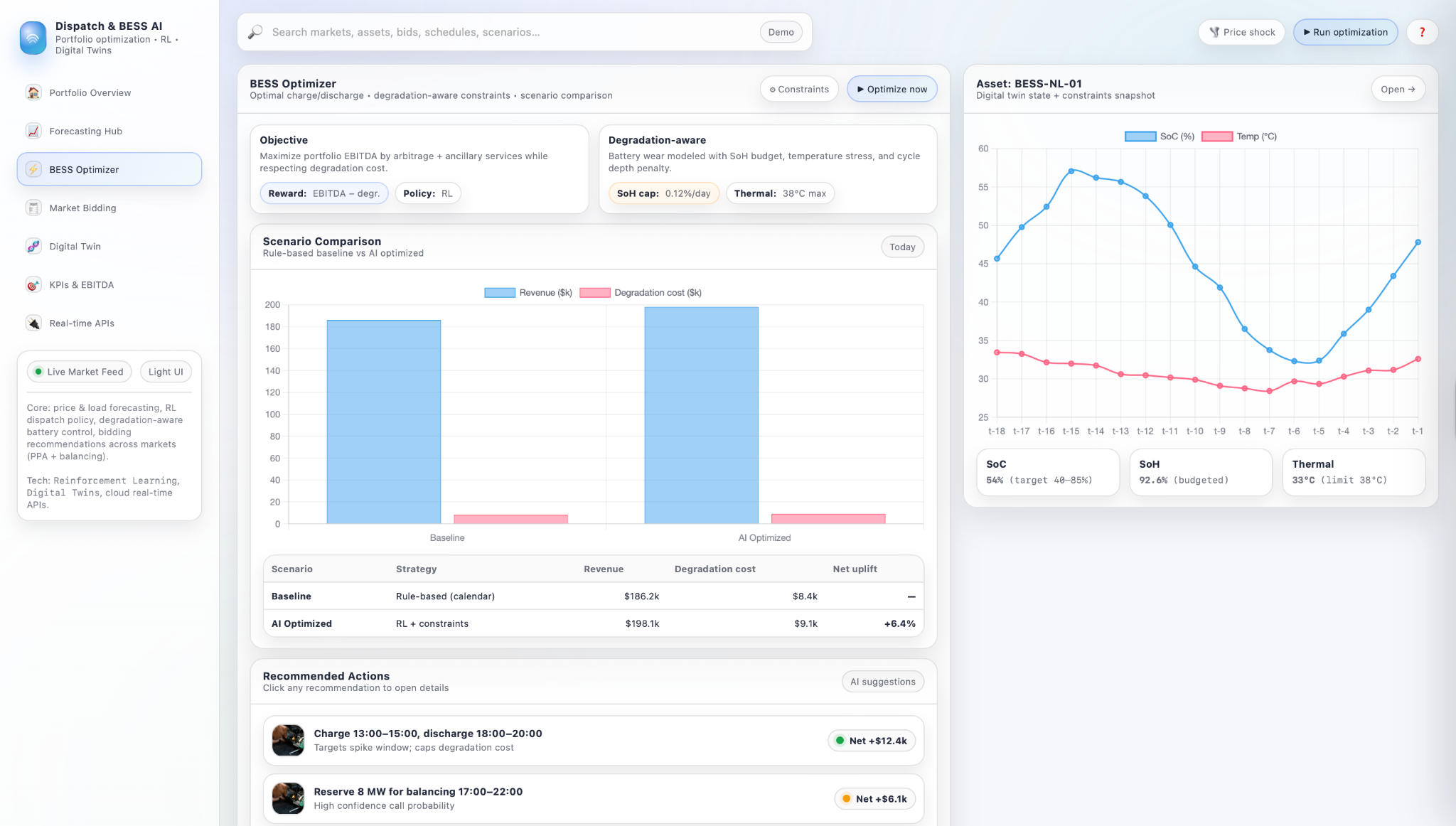
Sustainable profitability in energy storage requires a careful balance between aggressive market participation and the physical preservation of the hardware. The BESS Optimizer addresses this by treating battery wear as a direct functional cost within its decision-making logic. The system explicitly models State of Health (SoH) budgets and thermal limits—such as a 38°C maximum threshold—ensuring that every charge and discharge cycle is calculated against the long-term cost of degradation. By modeling battery wear through these specific budgets and temperature stress factors, the engine protects the asset's lifespan while seeking the highest possible EBITDA.
To prove the value of this approach, the platform provides a detailed Scenario Comparison that benchmarks AI-optimized policies against traditional rule-based baselines. In a typical evaluation, the AI-optimized strategy delivered a revenue increase from 186.2k to 198.1k. Even after accounting for a slightly higher degradation cost of 9.1k compared to the 8.4k baseline, the net uplift remained a significant +6.4%. These comparisons allow operators to see exactly how AI suggestions, such as "Avoid deep cycles today" when thermal forecasts are high, contribute to a net positive financial outcome.
Precision in the market is achieved through automated Market Bidding Recommendations that cover day-ahead, intraday, and balancing mechanisms. The engine generates specific bids with volume targets in megawatts (MW), price points, and confidence scores to guide execution. For example, the system may recommend selling 12 MW in a day-ahead window with 86% confidence while simultaneously reserving 8 MW for balancing calls. This granular level of detail ensures that bidding is never based on guesswork but on high-confidence data filtered through the asset’s current physical state.
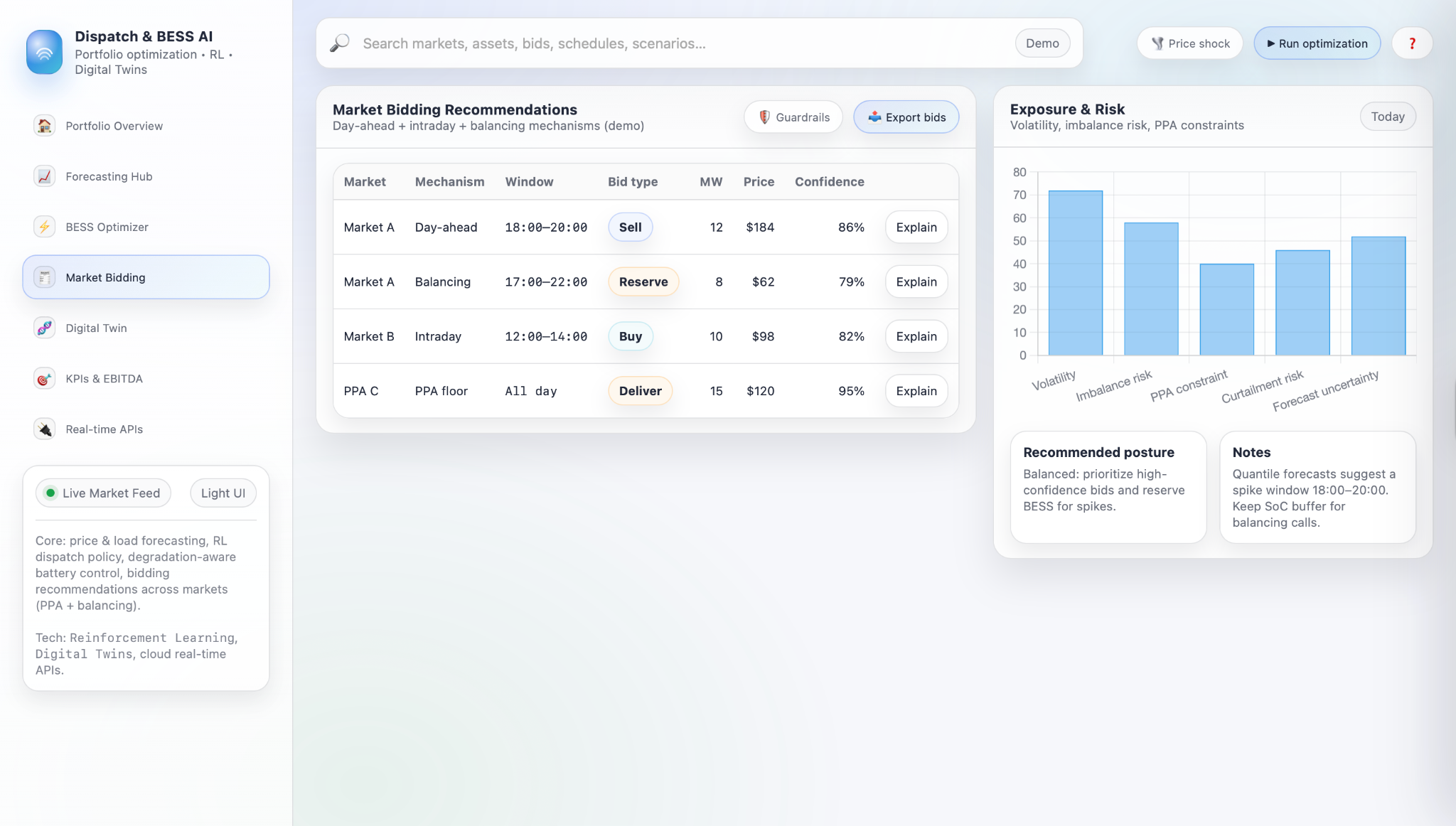
Finally, the system simplifies risk management by visualizing portfolio exposure to factors like imbalance risk and PPA constraints. By analyzing these risks alongside market volatility, the engine suggests an optimal "Recommended Posture," such as a "Balanced" approach that prioritizes high-confidence bids while keeping a State of Charge (SoC) buffer for unexpected spikes. This exposure management ensures that operators can maintain a defensive or aggressive stance based on real-time market conditions and technical notes, such as maintaining buffers for balancing calls suggested by quantile forecasts.
Safety Validation and Financial Performance
To ensure that AI-driven decisions are both safe and reliable, the platform utilizes high-fidelity Digital Twins to simulate plant behavior before any policy is deployed in a live market. These virtual models replicate the physical characteristics of the assets—including PV inverters, curtailment events, and BESS ramp limits—allowing operators to test "What-if" scenarios like price shocks or outage constraints in a risk-free environment. By comparing simulated behavior against actual dispatch data, the system provides a "sanity check" to verify that the AI’s strategy aligns with the physical reality of the site.
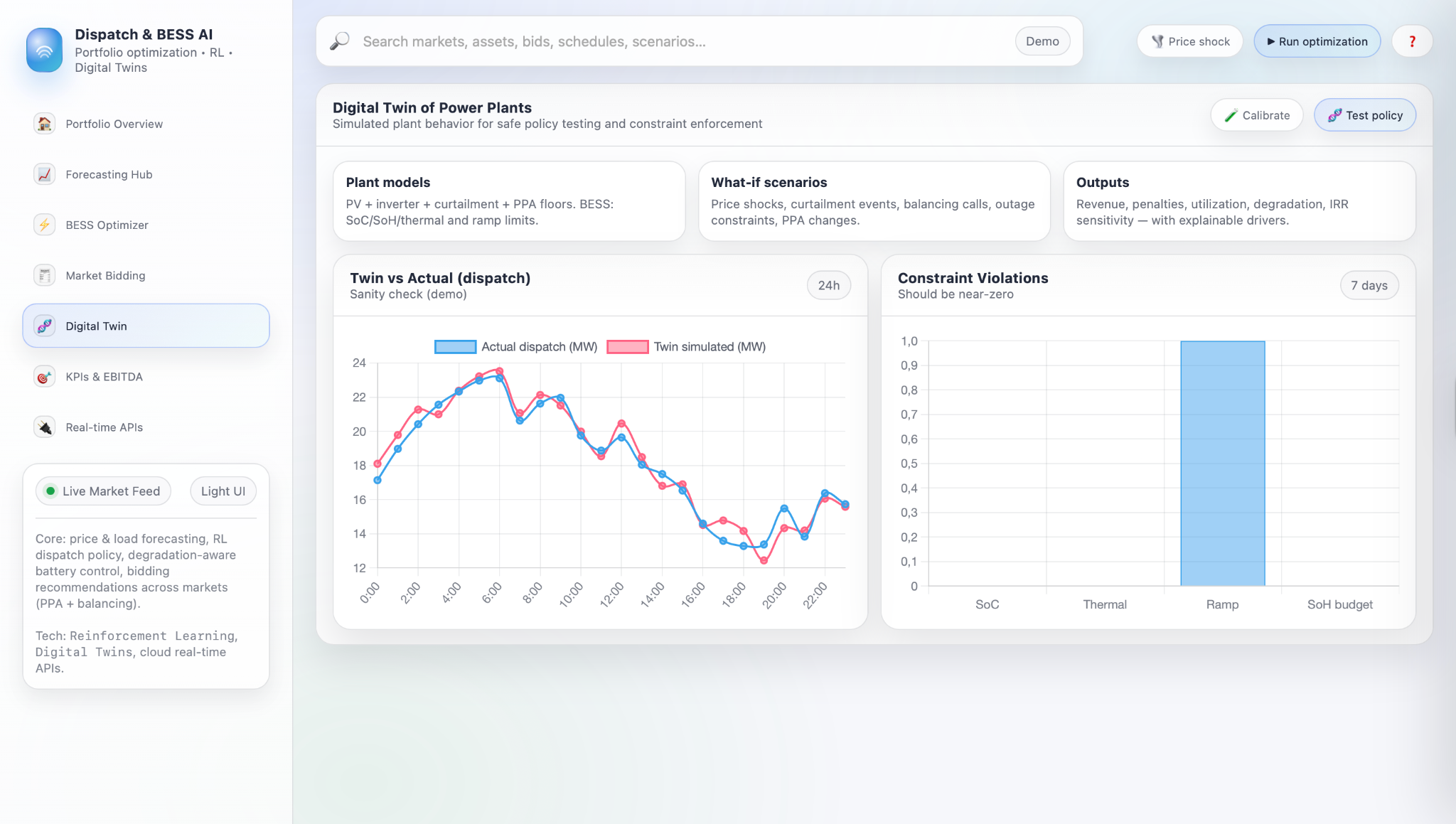
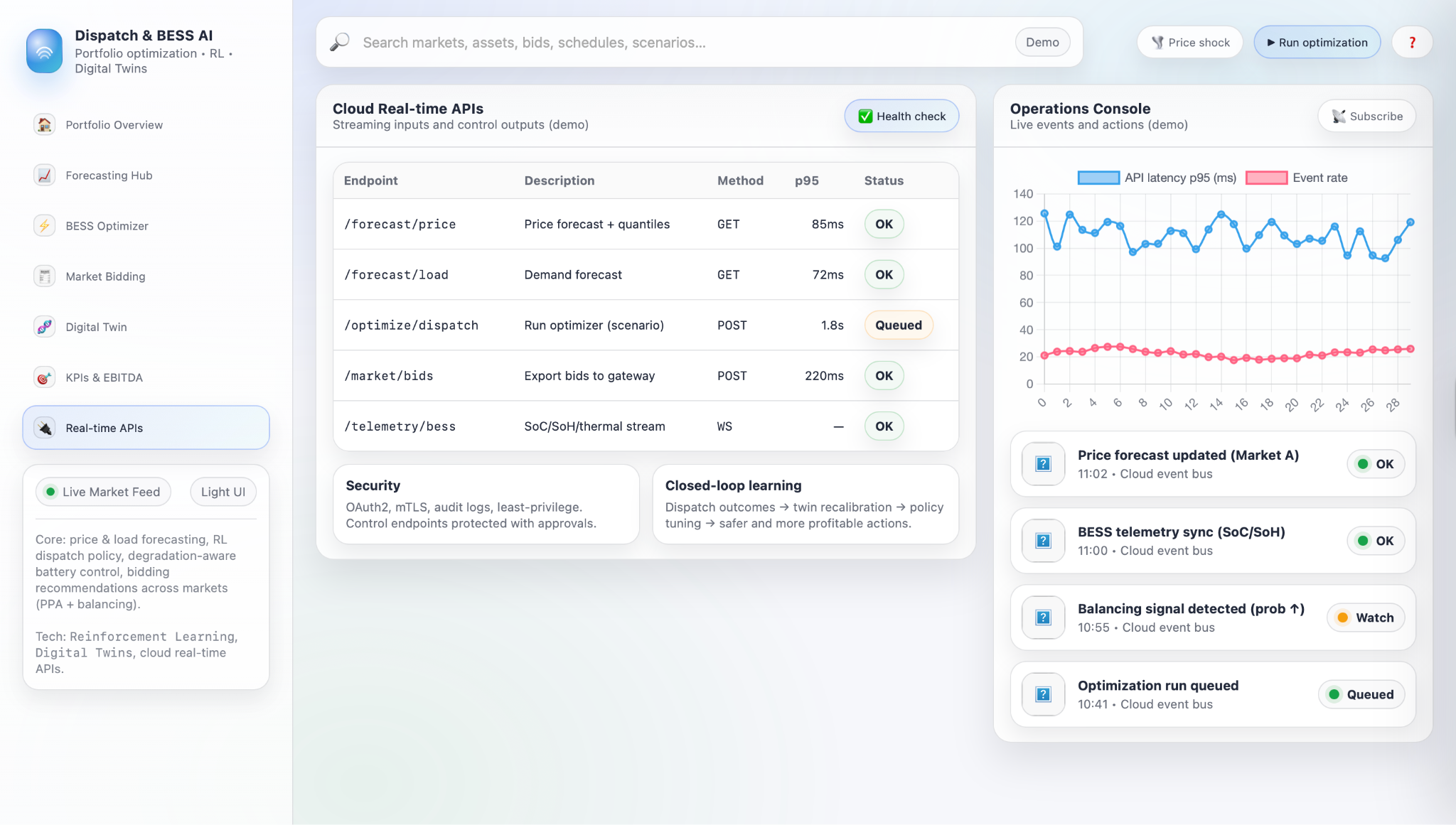
This simulation capability is critical for strict constraint enforcement. The engine continuously monitors the gap between "Twin" and "Actual" dispatch to ensure there are zero violations of critical operational boundaries, such as State of Charge (SoC) targets, thermal limits, or State of Health (SoH) budgets. Furthermore, the platform utilizes cloud-based real-time APIs to provide a continuous stream of telemetry for SoC, SoH, and thermal health, ensuring that the optimization runs with the most current asset data.
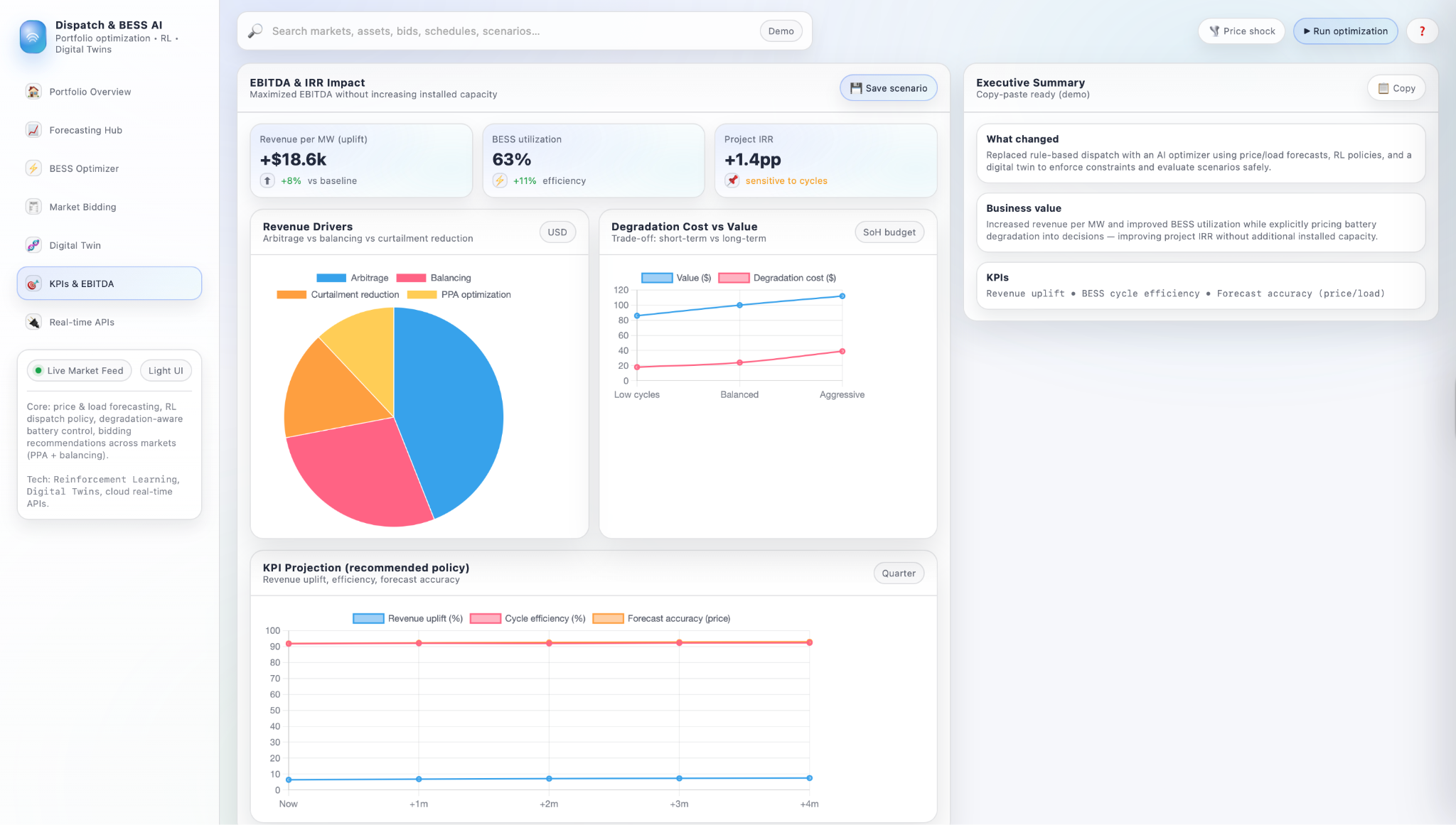
The ultimate value of this integrated approach is reflected in its strategic financial impact. The platform identifies the primary drivers of revenue—comparing the gains from arbitrage, balancing calls, and curtailment reduction—to maximize EBITDA without increasing installed capacity. These efficiencies have proven to deliver an 11% improvement in BESS utilization and a significant 1.4pp increase in the project’s Internal Rate of Return (IRR).
To maintain this performance over time, the system provides a long-term KPI Performance Projection. This allows executives to track key metrics like revenue uplift and BESS cycle efficiency across quarterly horizons. By explicitly pricing battery degradation into the daily optimization, the engine ensures that the forecast accuracy and efficiency gains remain stable, providing a sustainable path toward higher profitability and asset longevity.
Conclusion: Scaling Autonomous Energy Infrastructure
The transition toward the AI Portfolio Dispatch & BESS Optimization Engine represents a fundamental shift from manual, reactive operations to a truly autonomous energy infrastructure. By integrating real-time cloud APIs with machine learning-driven policies, the system effectively eliminates the need for manual dispatch intervention. This automation allows asset owners to scale their portfolios across complex markets without a corresponding increase in operational headcount, ensuring that every bid and dispatch decision is backed by high-fidelity data and Reinforcement Learning.
Long-term financial success in this sector is inseparable from asset health. By explicitly pricing battery degradation into the optimization reward function, the platform ensures sustainable growth that balances immediate revenue with the physical viability of the hardware. This approach protects the project's Internal Rate of Return (IRR) by preventing the "hidden costs" of aggressive cycling that often plague traditional rule-based strategies.
The future vision for this technology is to establish a data-driven standard for the global energy transition. As markets become more volatile and renewable integration grows, intelligent, autonomous management will be the baseline for any profitable energy portfolio. Infinity Technologies is leading this shift, providing the tools necessary to ensure that energy assets are not just participating in the market, but are optimized for both their current financial impact and their long-term operational future.


Our success stories

.png)
.png)
.png)
.png)
































.avif)




















Tell us about your project needs