


The table of content
Business Challenge
Transforming Customer Monetization in Telecom BSS
The client is a large telecom operator serving millions of subscribers across prepaid, postpaid, and enterprise segments. Its Business Support Systems (BSS) landscape includes core platforms such as billing, CRM, product catalog, and campaign management, along with multiple customer interaction channels including mobile applications, SMS, call centers, and retail touchpoints. These systems collectively drive revenue generation, customer engagement, and lifecycle management in a highly competitive market.
However, the operator faced a critical challenge: its customer engagement model was built on rule-based, batch-driven campaigns, which were no longer effective in a real-time, data-driven environment. Campaigns relied on static segmentation and delayed processing, resulting in:
- Low conversion rates (typically 1–3%)
- Generic, non-personalized offers
- Delayed responses to customer behavior
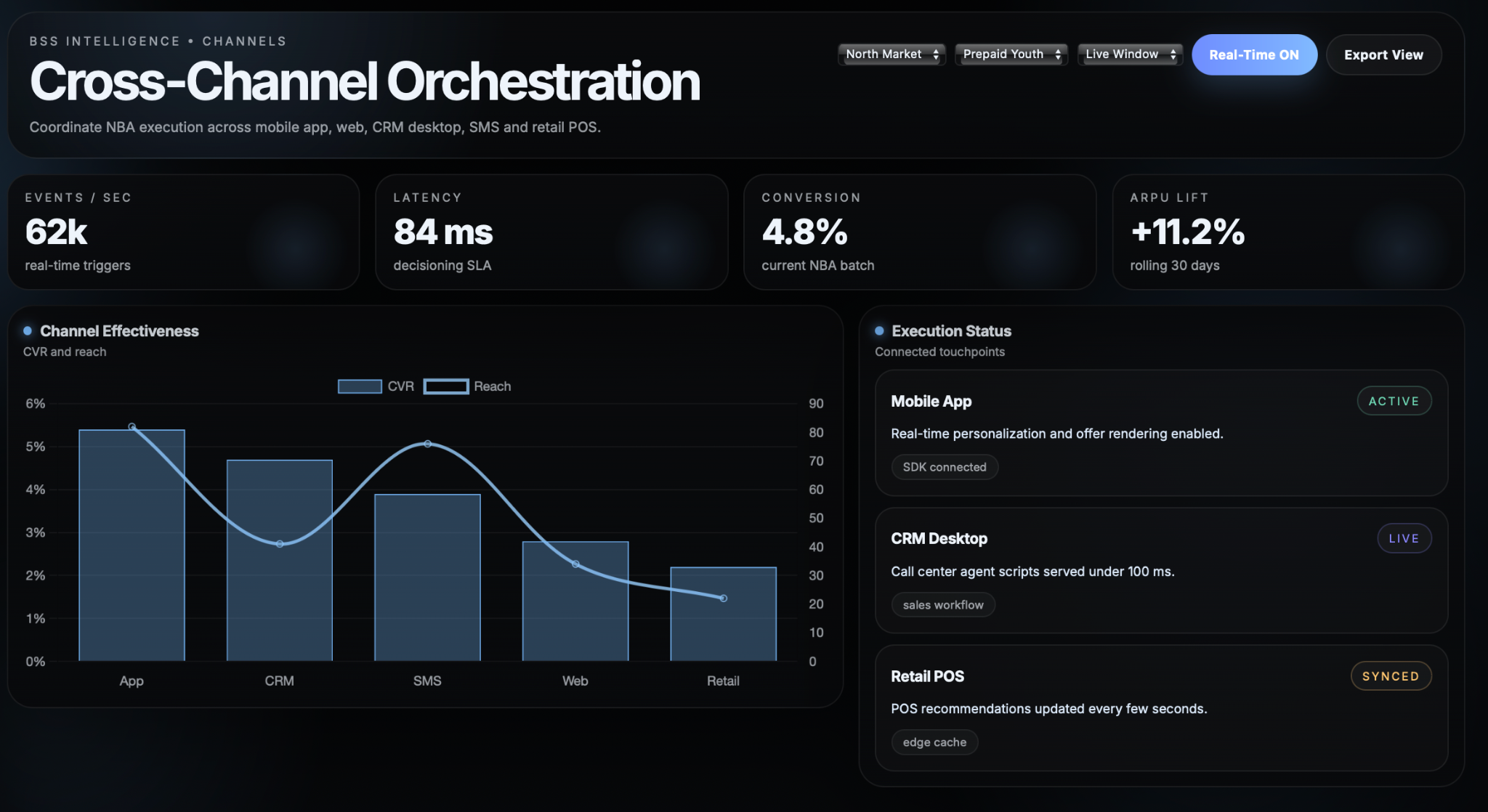
- Fragmented execution across channels
- Missed upsell, cross-sell, and retention opportunities
This reactive approach limited the operator’s ability to maximize Customer Lifetime Value (CLV), increase ARPU, and reduce churn, while also leading to inefficient marketing spend and inconsistent customer experience.
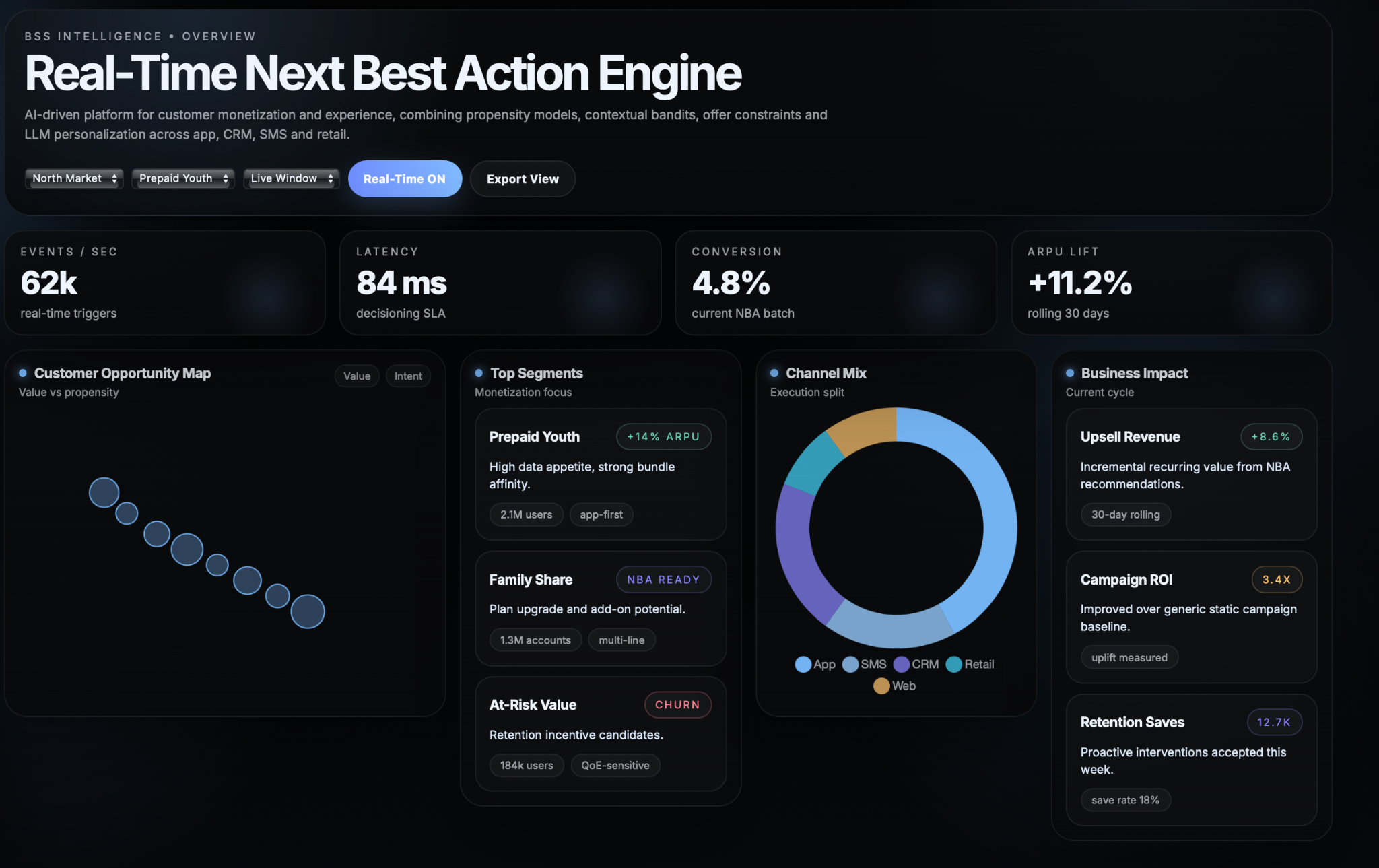
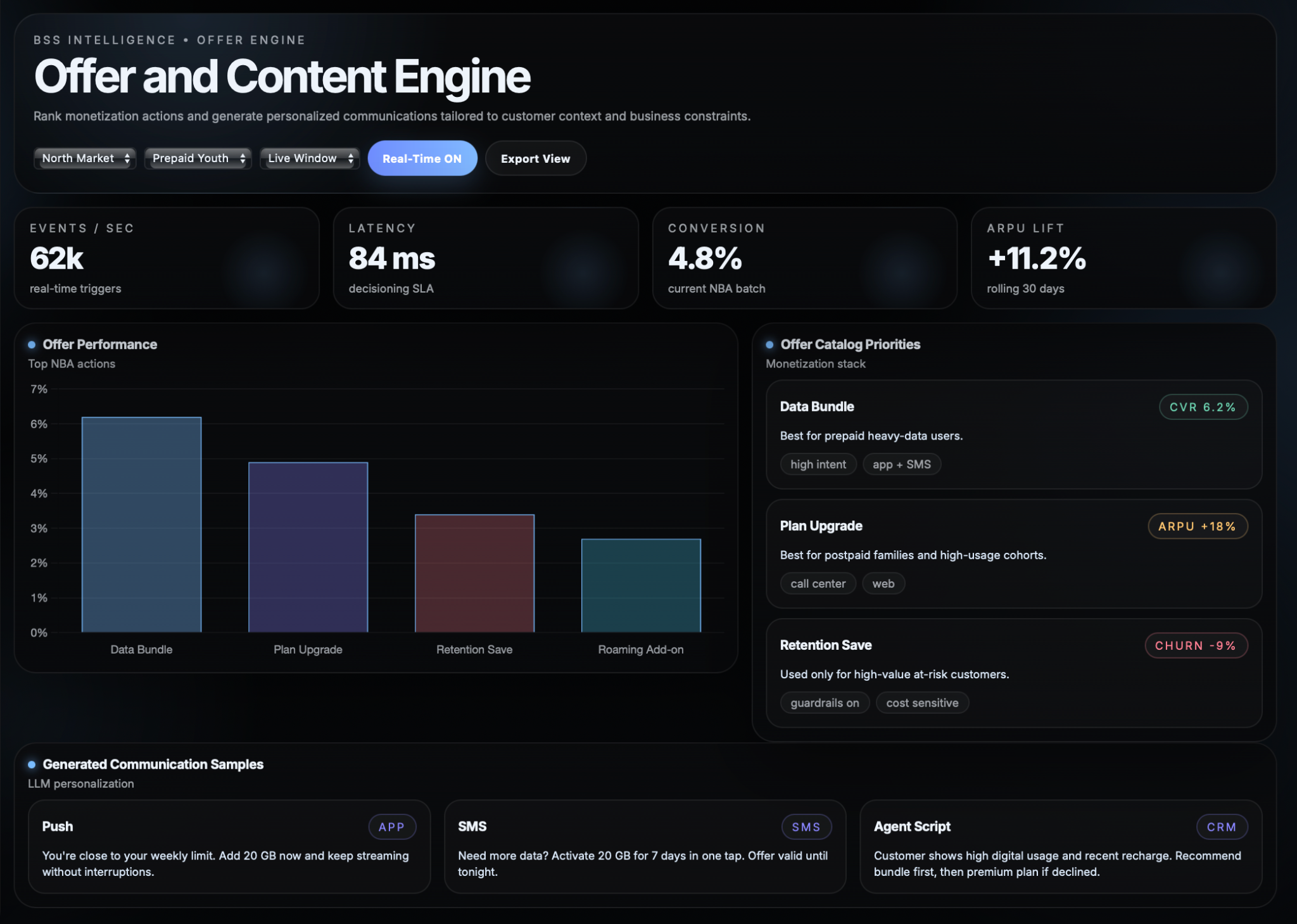
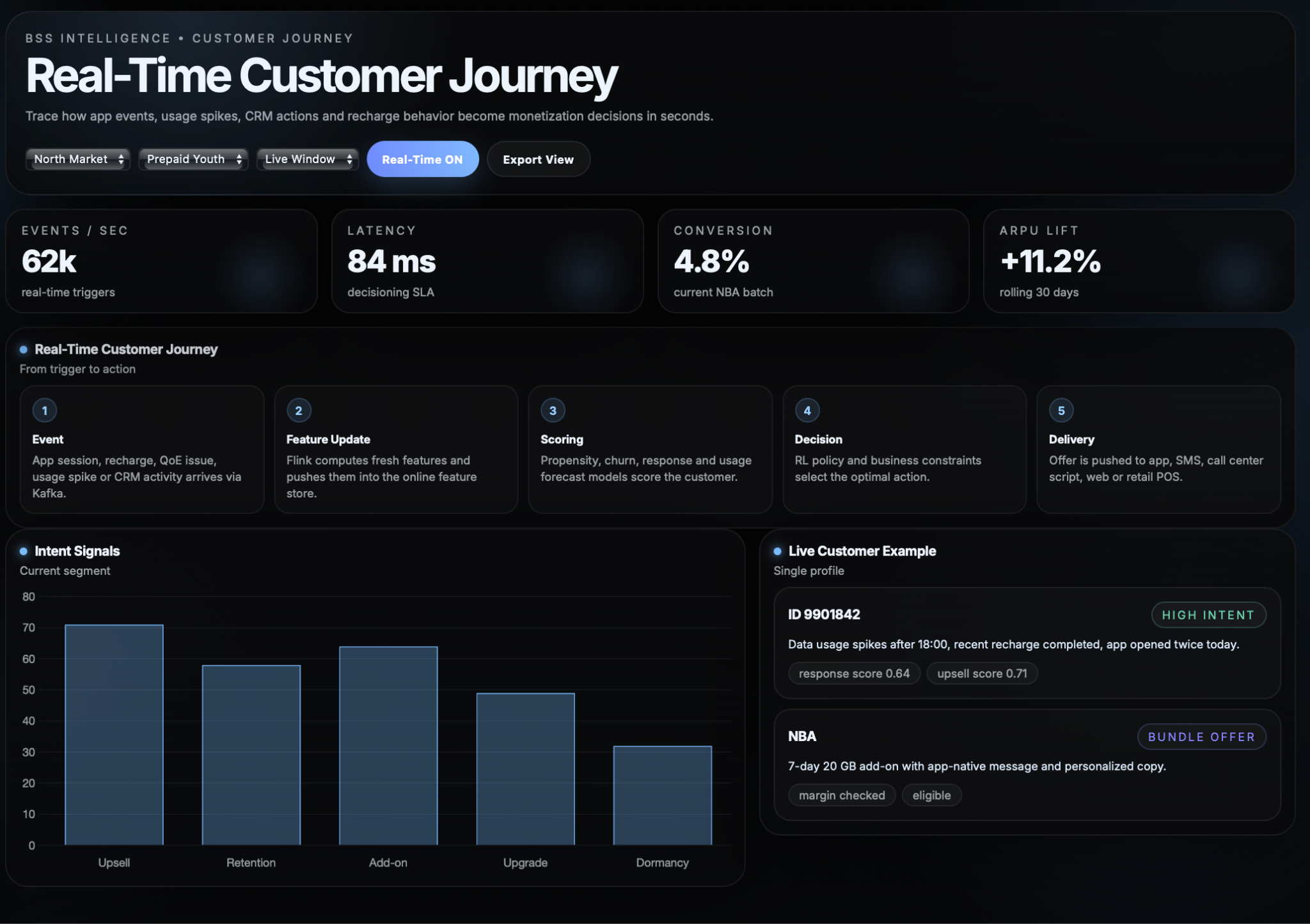
To address these challenges, Infinity Technologies implemented an AI-powered Next Best Action (NBA) Engine, transforming the BSS into a real-time, intelligent decisioning platform. The solution replaces static campaign logic with a streaming, AI-driven architecture that continuously analyzes customer behavior and determines the optimal action for each interaction.
By leveraging:
- Machine Learning models for propensity and behavioral prediction
- Reinforcement Learning for continuous optimization of decisions
- Large Language Models (LLMs) for personalized communication
- Real-time data processing (Kafka, Flink) for instant responsiveness
the platform enables sub-second decisioning, delivering highly personalized offers across all channels at the exact moment of customer interaction.
This shift from reactive campaigns to proactive, AI-driven engagement allows the operator to turn every customer interaction into a monetization opportunity—driving higher conversion rates, increasing ARPU, and significantly improving customer retention.
Solution
The solution introduces a fully automated, AI-driven approach to revenue assurance, transforming a traditionally reactive and manual function into a real-time, intelligent control system across the entire BSS landscape. Instead of validating revenue after billing cycles are completed, the platform continuously monitors data flows, detects inconsistencies, and initiates corrective actions as events occur.
At the foundation of the system is real-time anomaly detection across revenue streams. Every transaction—from raw usage records to final billing output—is analyzed using machine learning models trained to recognize normal behavioral patterns. Any deviation, whether caused by missing records, duplicated entries, or incorrect rating logic, is immediately flagged. This enables operators to identify revenue leakage at the moment it happens rather than days or weeks later.
To ensure full visibility across complex telecom architectures, the platform correlates events across both OSS and BSS systems. It links data from mediation, rating, billing, CRM, and network layers into a unified analytical view. This cross-system correlation allows the solution to detect issues that would otherwise remain invisible when analyzing systems in isolation. For example, discrepancies between usage captured in the network and charges applied in billing can be instantly identified and traced.
A critical capability of the solution is the identification of incorrect, missing, or duplicated billing records. The system continuously validates data consistency at every stage of the revenue chain. It detects scenarios such as incomplete CDR flows, duplicated event processing, or misapplied tariffs, all of which directly contribute to revenue leakage. These checks are performed dynamically, eliminating the need for static rule-based reconciliation processes.
To move beyond detection and into true intelligence, the platform leverages graph-based root cause analysis. Using Graph Neural Networks (GNNs), it maps relationships between entities such as customer accounts, usage events, pricing rules, and billing outputs. This enables the system not only to detect anomalies but to understand how they propagate across systems and pinpoint the exact source of the issue.
In addition to real-time detection, predictive machine learning models assess leakage risks before they materialize. By analyzing historical anomalies, system behavior patterns, and known failure points, the solution assigns risk scores to transactions and system components. This allows operators to proactively address high-risk areas and prevent revenue loss before it occurs.
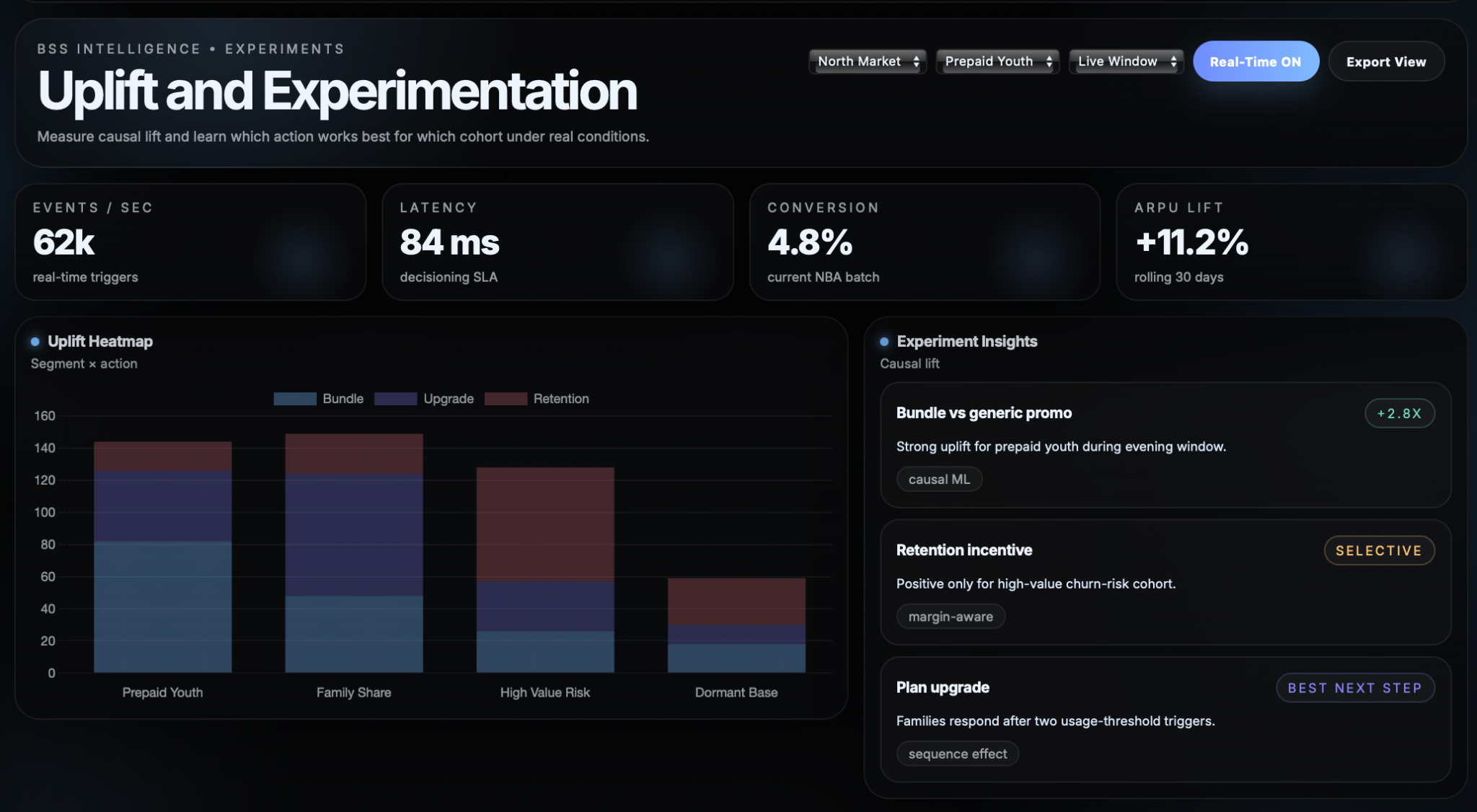
Once an anomaly or risk is identified, the platform activates automated workflows that ensure immediate resolution. These workflows are tightly integrated with existing BSS and operational systems, enabling seamless execution without manual intervention. Incorrect charges are automatically re-rated, ensuring billing accuracy before invoices are issued. At the same time, detailed tickets are created within BSS systems, providing full traceability for further investigation when needed.
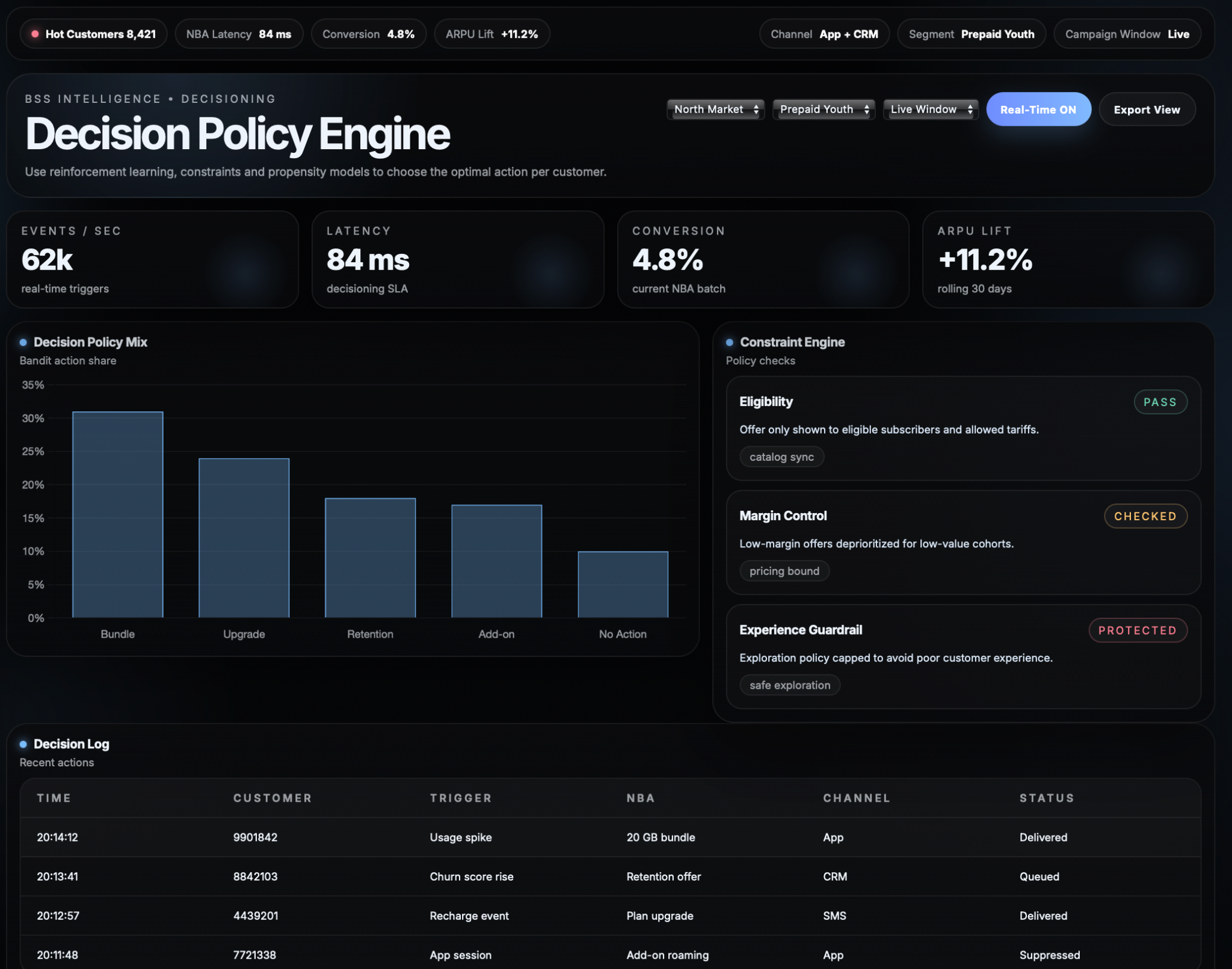
Revenue assurance teams are also supported through real-time alerting mechanisms. Instead of manually reviewing large datasets, teams receive targeted notifications enriched with context, root cause insights, and recommended actions. This significantly reduces operational workload while improving response speed and accuracy.
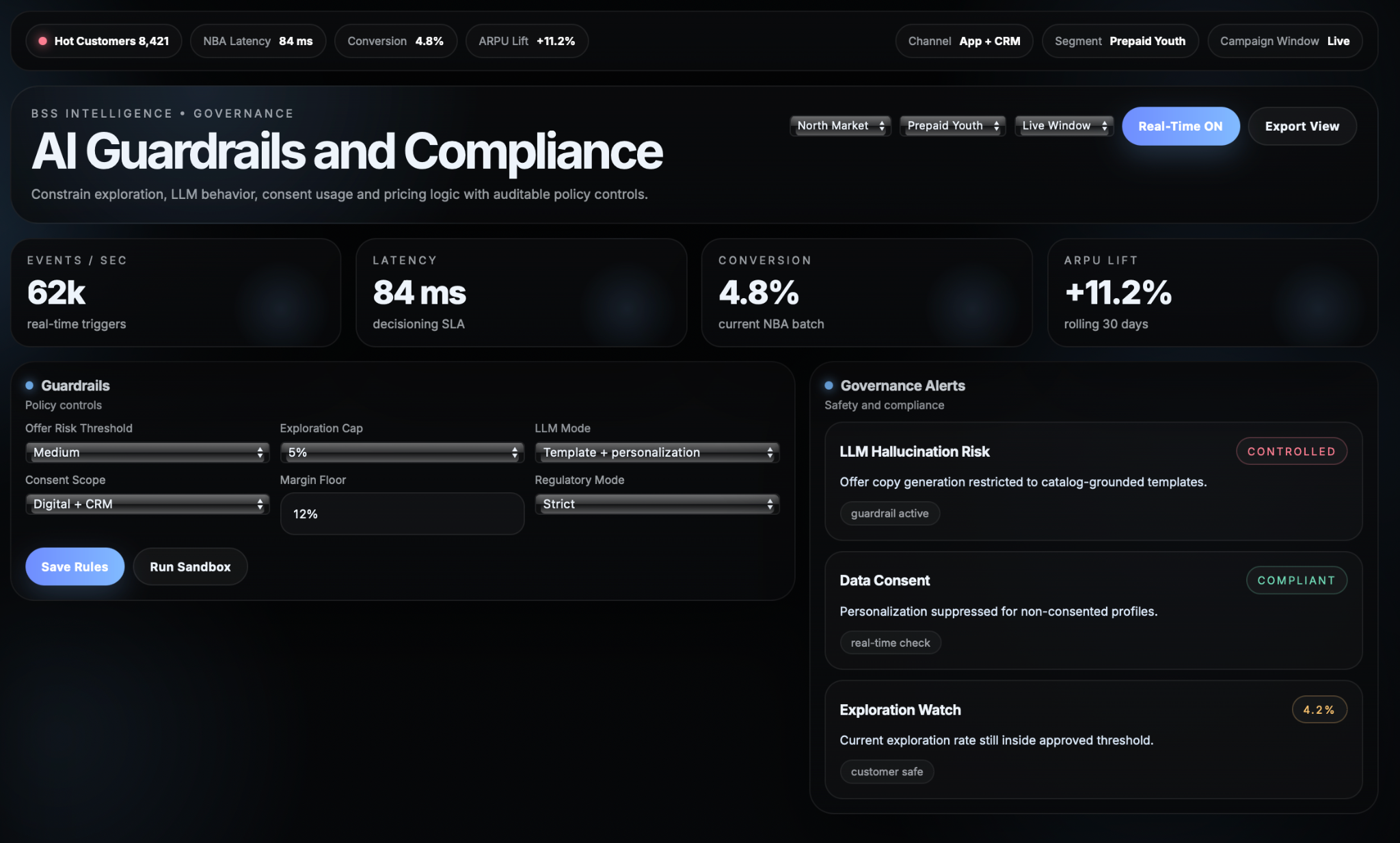
The result is a closed-loop revenue assurance system where detection, analysis, and correction are fully automated and continuously optimized. Each resolved issue feeds back into the models, improving their accuracy over time and reducing false positives. This creates a self-learning system that evolves with the complexity of the telecom environment.
From a business perspective, this approach eliminates revenue leakage at scale, reduces operational costs associated with manual reconciliation, and ensures billing accuracy that directly impacts customer trust. By combining real-time analytics, graph intelligence, and automated execution, the solution enables telecom operators to move from reactive revenue protection to proactive revenue optimization.
Technology Architecture
Data Ingestion Layer: Apache Kafka, Apache Spark
Processing Layer: Apache Flink, Apache Spark
Storage Layer: Amazon S3, HDFS, Neo4j
AI/ML Layer: Kubernetes, TensorFlow, PyTorch, ONNX
Feature Store: Feast
Integration Layer: REST APIs, gRPC
Monitoring & Observability: Prometheus, Grafana, OpenTelemetry
Results and Impact
The implementation of the AI-driven revenue assurance solution delivers strong and measurable improvements across business, operational, and financial dimensions, with clearly quantifiable results visible shortly after deployment. One of the most critical achievements is the reduction in revenue leakage, driven by continuous monitoring and real-time anomaly detection across the entire BSS pipeline. This directly translates into improved billing accuracy, ensuring that customers are charged correctly and consistently. As a result, telecom operators experience a noticeable decrease in billing-related complaints, strengthening customer trust and reducing pressure on support teams. At the same time, the automation of validation and reconciliation processes significantly reduces manual effort, allowing internal teams to focus on higher-value analytical tasks rather than routine checks.
From an operational standpoint, the transformation is even more pronounced. The system shifts issue detection from delayed batch validation to real-time monitoring, fundamentally changing how operators respond to problems. A large share of traditional revenue assurance activities becomes fully automated, significantly lowering dependency on manual intervention. Root cause analysis is also dramatically improved due to graph-based dependency mapping that clearly identifies where and how issues originate. At the same time, the platform ensures full end-to-end visibility across OSS and BSS systems, eliminating blind spots and enabling faster, more informed decision-making.
Financially, the impact is both immediate and scalable. Operators see a direct increase in recovered revenue, as previously undetected leakage is identified and corrected in near real time. This uplift is achieved without additional customer acquisition or pricing changes, making it a highly efficient revenue optimization lever. In parallel, operational costs associated with revenue assurance are reduced due to automation and the elimination of labor-intensive reconciliation processes. These combined improvements contribute to stronger profitability and improved financial performance. Overall, the solution delivers a rapid and substantial return on investment, making it not only a technical upgrade but a significant business performance driver.
Key Results
- 30–60% reduction in revenue leakage
- 95–99% billing accuracy achieved
- 20–40% decrease in customer billing complaints
- 40–70% reduction in manual reconciliation effort
- Up to 90% faster issue detection (from days to minutes)
- 50–80% of processes fully automated
- 30–50% faster root cause analysis
- 100% end-to-end OSS/BSS visibility
- 5–15% increase in recovered revenue
- 20–40% reduction in operational costs
- 3–8% improvement in EBITDA margins
- 2–5x ROI within 12 months
Conclusion
AI-driven revenue assurance fundamentally transforms how telecom operators manage and protect their revenue streams. What was traditionally a reactive process based on manual reconciliation and delayed validation is now replaced by a proactive, intelligent system capable of detecting and resolving issues in real time. This shift eliminates inefficiencies, reduces human dependency, and enables continuous control over complex BSS environments.
By leveraging real-time data processing, advanced machine learning models, and graph-based intelligence, operators gain a deep, system-wide understanding of how revenue flows across mediation, rating, and billing layers. This allows not only for accurate detection of anomalies but also for precise identification of their root causes and immediate corrective action.
As a result, telecom companies are able to protect their revenue streams more effectively, ensuring that every transaction is accurately captured and billed. At the same time, improved billing accuracy and transparency lead to higher customer trust and fewer disputes, directly enhancing the overall customer experience.
Ultimately, the adoption of AI-driven revenue assurance enables scalable, automated BSS operations. It positions operators to move beyond revenue protection toward continuous revenue optimization, creating a more resilient, efficient, and future-ready business model.


Our success stories

.png)
.png)
.png)
.png)




























.avif)



















Tell us about your project needs