The table of content
InfinitySDLC Engineering Guides · 11/12
Reference implementation guide, not a report of a completed client deployment. Code, configurations, metrics and policies are illustrative. Adapt and validate them before production use.
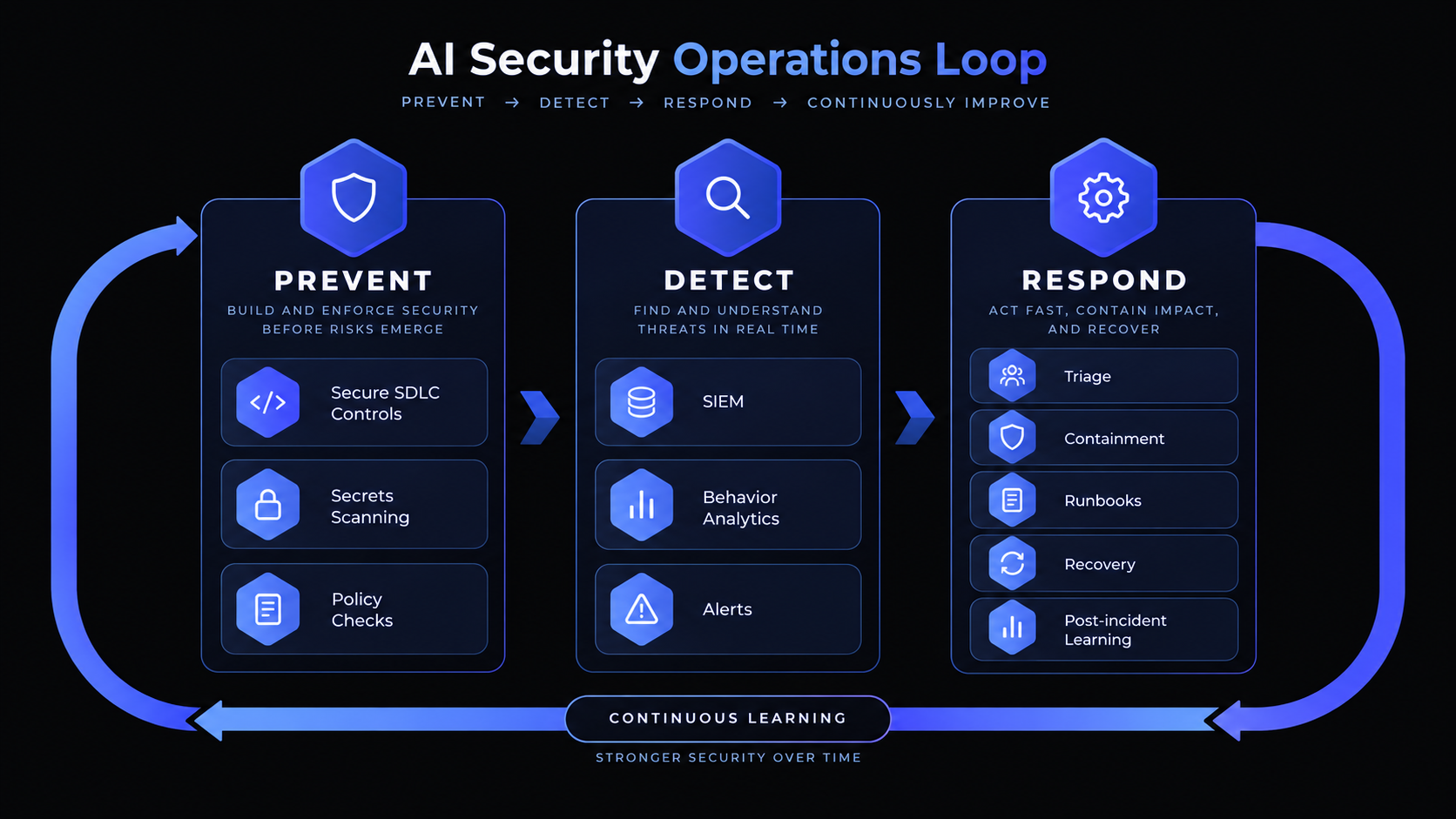
The Incident Response Agent is a command-center copilot. It assembles evidence, keeps the timeline, suggests safe runbook steps, coordinates specialist agents and drafts communications while preserving a human incident commander for consequential decisions.
11.1 Incident session model
Create an incident-scoped session with an append-only event log. Every hypothesis, tool query, action proposal, approval and executed command receives a timestamp and actor. This session becomes both short-term memory and audit evidence. Do not depend on a single long chat transcript; persist structured state so a new model session can resume.
incident_state:
  id: INC-2026-441
  severity: SEV1
  commander: user:alice
  affected_services: [checkout, payments]
  customer_impact: "18% payment failures"
  hypotheses:
    - id: H1
      text: "pricing DB pool exhaustion after release"
      confidence: 0.83
      evidence: [trace:q91, metric:m33, deploy:d77]
  actions:
    - proposal: rollback payments release
      approval: pending
11.2 Integrations
- Observability: metrics/traces/logs/topology tools from Article 7.
- Release: deployment/feature-flag state and rollback proposals.
- Pager/ITSM: incident creation, responders, escalation, status.
- Chat: structured updates and action requests; channel text is untrusted input.
- Runbook RAG: versioned operational procedures and service ownership.
- Cloud/Kubernetes: read-only diagnosis; tightly scoped write tools for approved runbook actions.
11.3 Multi-agent pattern
Use specialist agents as bounded subagents rather than one omnipotent incident bot. The coordinator delegates: Observability investigates symptoms; Threat Detection checks security signals; Reliability evaluates blast radius; Release computes rollback safety. Subagents return structured findings, not uncontrolled side effects. The coordinator reconciles conflicts and presents the incident commander with options.
11.4 Communications without hallucination
Generate status updates from structured incident state, not from free-form chat. Separate confirmed facts, current impact, actions in progress and next update time. Never invent an ETA. External/customer communications should require human approval and use templates with legal/comms constraints.
11.5 After the incident
- Freeze the final structured timeline and evidence links.
- Draft a post-incident report that distinguishes triggering change, root cause, contributing factors and detection gaps.
- Create proposed corrective actions mapped to owners and verification criteria.
- Index the approved postmortem and new runbook facts for future retrieval.
- Add the incident to evaluation replay sets for Observability, Reliability, Threat Detection and Incident Response agents.
Implementation Blueprint: Structured State Across Context Windows
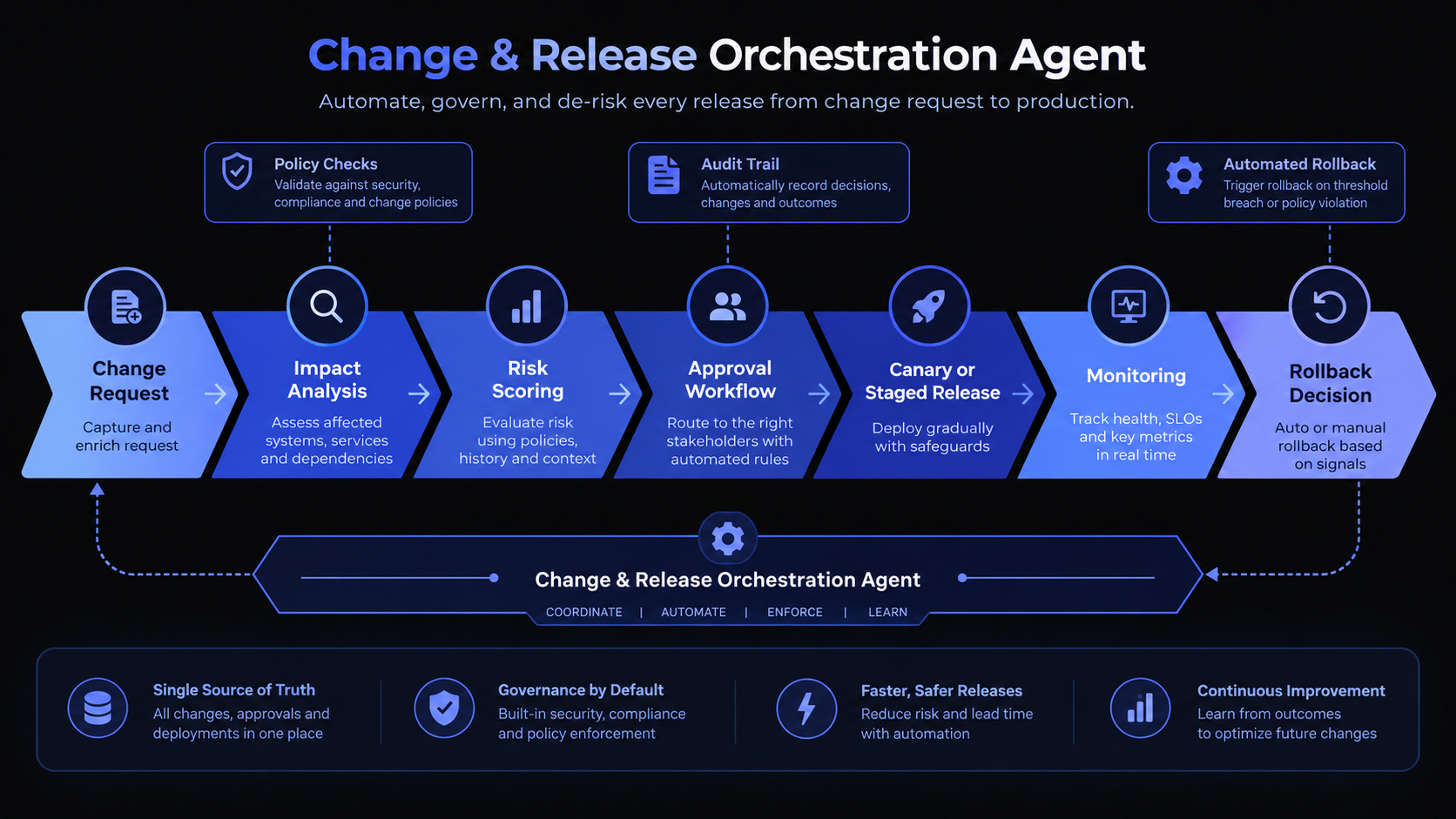
Coordinator state machine
OPEN -> TRIAGE -> INVESTIGATING -> MITIGATING -> MONITORING -> RESOLVED -> REVIEW
TRIAGE->INVESTIGATING requires affected_service + impact + commander
INVESTIGATING->MITIGATING requires approved mitigation proposal
MITIGATING->MONITORING requires execution evidence
MONITORING->RESOLVED requires recovery for policy-defined observation period
Typed runbook step
step_id: payments.rollback_release
preconditions:
  - latest_deploy_age < 2h
  - previous_version_health == healthy
approval: incident_commander
action: release.rollback(service, deployment_id)
verify:
  - payment_error_rate < 2% for 10m
reverse: release.redeploy(deployment_id)
Runbooks should be parsed into typed steps. Never execute shell snippets copied from old postmortems directly. For long incidents, write periodic compact state snapshots: confirmed facts, rejected/active hypotheses, current impact, actions/approvals and unresolved questions. New model sessions resume from the state snapshot plus bounded evidence rather than the full transcript.
Source and Shared Prerequisites
Adapted from the September 2026 Enterprise AI Agent Mesh handbook, Article 11 and Blueprint 11. The Enterprise Agent Platform Foundation guide provides the shared identity, MCP, retrieval, sandbox, audit and evaluation design, plus the source handbook’s further-reading list. Validate model, protocol and tool versions before production use.
Explore the Series


Our success stories
.png)
.png)
.png)
.png)








































Tell us about your project needs






.png)
.png)