Redefining Basin Simulation with HPC and Machine Learning
Redefining Basin Simulation with HPC and Machine Learning
AI/ML
Desktop GUI
HPC
Scientific Computing
Basin cross-section · schematic
Geologic time150 Ma
Burial
Maturation
Migration
Accumulation
Burial, maturation and charge through geologic time.
Source rock
Carrier bed
Seal
Oil window
Hydrocarbons
About the Task
Petroleum-systems simulators carry decades of validated physics, and many of them still run as batch jobs held together by scripts. Here is how our scientific computing team modernizes this kind of software: we tune the numerical core for current clusters, build a desktop suite around it, and use the faster solver to train ML models that make large uncertainty studies affordable.
results
Faster simulations
results
Massive overnight modeling
Services used
Build Strategy
5–10×Shorter simulation runs on reference models
≥75%Strong-scaling parallel efficiency at 1,024 cores
≥1,000×Faster scenario evaluation with ML surrogates
10,000+Scenarios in an overnight sensitivity study
Design targets we engineer and test against. Real gains depend on the code base and the hardware, so we measure a baseline before committing to numbers.
A basin model reconstructs how a sedimentary basin was buried, heated and charged with oil and gas over tens to hundreds of millions of years. It couples burial history, heat flow, source-rock kinetics, pore pressure and multiphase migration on 3D grids that change shape through geologic time.
The numerical cores behind these models are usually a mix of Fortran and C++ that has been checked against real basins for years. Nobody wants to rewrite that physics, and nobody should. The work is in everything around it: parallel performance, input and output, set-up tools, visualization, and a way to run thousands of cases instead of a handful.
It takes three kinds of engineers who rarely sit in one team: HPC developers who are comfortable in old Fortran, desktop developers who know Qt and OpenGL, and ML engineers who understand what a surrogate can and cannot replace.
Challenge
What usually slows modeling teams down
A typical set-up: the simulator and the tools around it are separate applications connected by file exports.
RuntimeCode written for earlier hardware leaves most cores and GPUs idle, and serial output turns into the bottleneck as grids get finer.
Too many hand-offsData preparation, parameter set-up, uncertainty runs and 3D review happen in different tools, joined by exports and format conversions.
Slow model set-upGetting horizons, wells, lithologies, kinetics and boundary conditions into a valid model is mostly manual work.
Few scenariosIf one full-physics run takes hours, a sensitivity study stops at a few dozen cases.
Knowledge in a few headsA handful of senior modelers know every step of the workflow, and their time is the scarcest resource on the team.
Architecture
The solver stays at the center
We don't replace a validated simulator. We make it faster and give every other component one versioned API to reach it. The desktop suite, Python notebooks and ML agents all start the same runs and read the same results.
Desktop suite
Qt 6 and OpenGL. One project workspace from raw data to final maps.
Project Manager
Model Builder
Run Monitor
Uncertainty Studio
4D Viewer
ML & agents
Surrogates and assistants that call the same API a person would.
Set-up assistant
Run watchdog
Sensitivity assistant
Surrogate service · ONNX
On-prem LLM
Application framework
C++ core with a Python API through pybind11.
Plug-in SDK
Project & data model
Job orchestration
Provenance & audit
Tool adapters
Data layer
Open, parallel formats with metadata and lineage.
HDF5 / XDMF store
RESQML exchange
LAS · SEG-Y · ZMAP importers
Metadata catalog
Compute · Linux cluster
The existing simulator, profiled, optimized and containerized.
Basin simulation engine
Fortran · C++
MPI + OpenMP
GPU kernels · CUDA / OpenACC
Slurm · Apptainer
Existing simulator, optimizedExisting in-house tools, connected through adapters
Speed before screensWe start with the solver. Every tool built later benefits from the faster engine, and performance problems can't hide behind a UI.
One API for people and scriptsThe GUI, notebooks and agents go through the same API, so automation can't skip validation or the audit log.
Nothing leaves the buildingThe suite, the ML models and any language model run on the client's own infrastructure.
HPC Engineering
Making the numerical core scale
Strong-scaling acceptance envelope
Speed-up relative to 16 cores. We agree an efficiency floor up front and check every benchmark run against it.
01
Profile before touching codeVTune, Advisor, Nsight Systems and Score-P give a hot-spot map on reference models and a baseline everyone agrees on.
02
Modernize the hot loopsFortran 2018 and C++20 refactoring, vectorization and cache-friendly data layouts where the profile says it matters.
03
Hybrid parallelismMPI domain decomposition across nodes, OpenMP threads inside a node, and load balancing for irregular basin grids.
04
GPU kernels where they pay offCUDA or OpenACC for kinetics, PVT/flash and linear solvers, but only for kernels that dominate the runtime.
05
Parallel I/OHDF5/XDMF with chunking and compression, checkpoint/restart, and RESQML exchange with interpretation tools.
06
Guard the physicsA golden-case regression suite with agreed numerical tolerances runs in CI on the cluster for every change.
ML & Agents
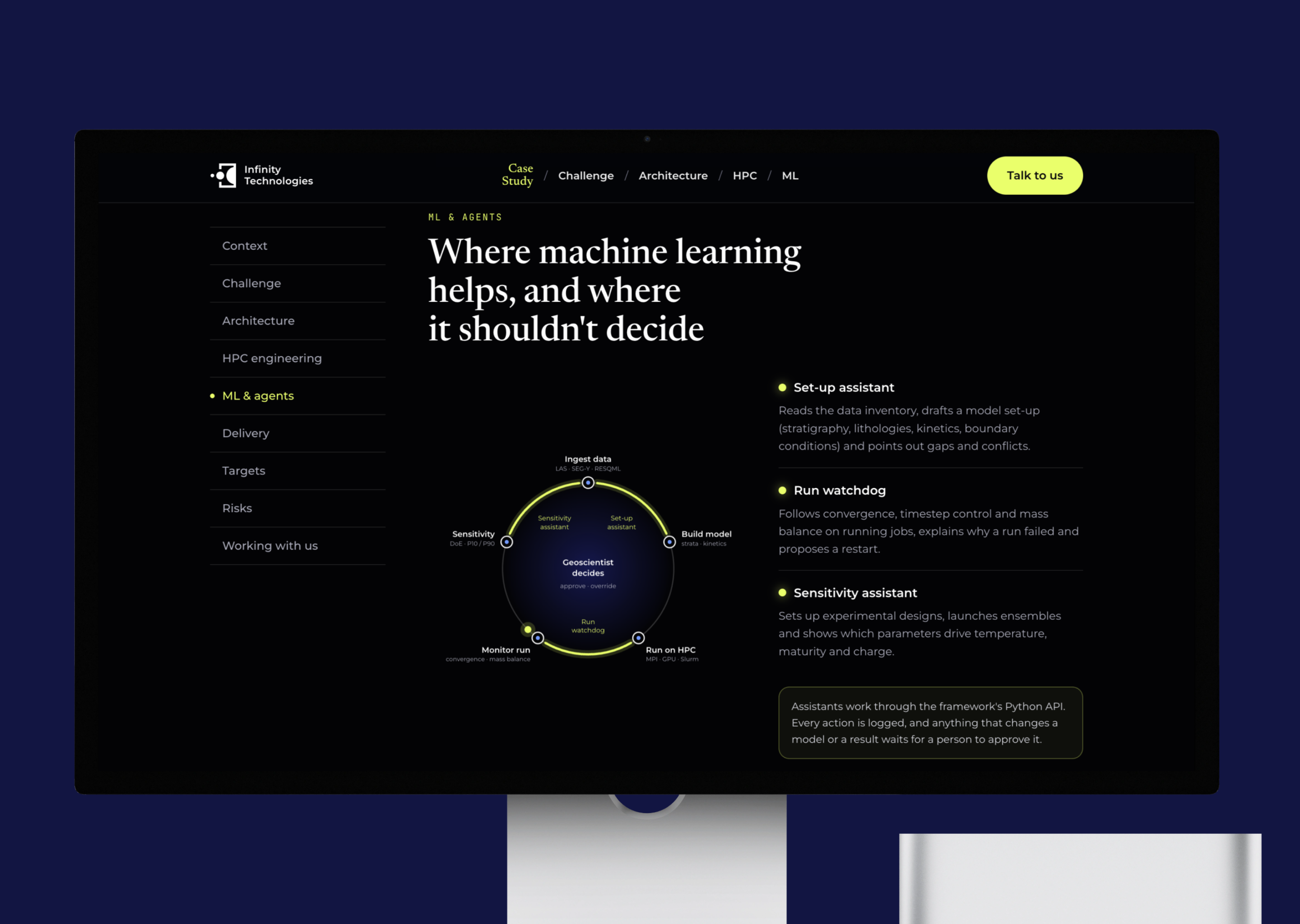
Where machine learning helps, and where it shouldn't decide
Set-up assistantReads the data inventory, drafts a model set-up (stratigraphy, lithologies, kinetics, boundary conditions) and points out gaps and conflicts.
Run watchdogFollows convergence, timestep control and mass balance on running jobs, explains why a run failed and proposes a restart.
Sensitivity assistantSets up experimental designs, launches ensembles and shows which parameters drive temperature, maturity and charge.
Assistants work through the framework's Python API. Every action is logged, and anything that changes a model or a result waits for a person to approve it.
Screening 10,000 scenarios
without 10,000 full runs
Surrogates learn from ensembles of full-physics runs on the cluster. Gaussian processes and gradient boosting handle scalar outputs; neural operators and graph networks handle 3D fields such as temperature, vitrinite reflectance (%Ro) and pore pressure.
Each prediction comes with an uncertainty estimate. When it is too wide, the case goes back to the full simulator, and the result becomes new training data. Accuracy improves where the team actually works.
10,000scenarios
screened by the surrogate in minutes
200candidates
ranked by charge risk and uncertainty
20full runs
checked with full physics on the cluster
1view
P10 / P50 / P90 ready for review
Delivery
Four workstreams, one code base
The streams run in parallel and meet at shared integration releases, so the desktop and ML teams always build on the current solver instead of waiting for it.
ASolver & HPC
Led by an HPC architect
Baseline & profiling
Hybrid MPI / OpenMP
GPU kernels
Parallel I/O
BDesktop platform
Led by a Qt / OpenGL architect
Suite shell
Model Builder
4D Viewer
Plug-in SDK
CData & integration
Led by a solution architect
Importers
HDF5 project store
Tool adapters
Job orchestration
DML & agents
Led by an ML lead
Training ensembles
Surrogates
Assistants
MLOps
Where each skill is used
Core skill for the streamSignificantSupporting
A typical team at full speed: 24 specialists
Targets
Design targets and how we verify them
Metric
Baseline
Target
Verified by
Simulation wall-clock, reference models
Measured at kick-off
5–10× faster
Benchmark suite on the client's cluster
Strong-scaling efficiency
Measured at kick-off
≥75% at 1,024 cores
Scaling runs from 16 to 1,024 cores
Checkpoint and output I/O
Measured at kick-off
3× faster, half the storage
Parallel HDF5 with compression, same fields
Time to set up a reference model
Time study with modelers
−60%
Before/after walkthrough with the same team
Tools in the daily workflow
Several separate applications
One suite
Workflow walkthrough and user survey
Sensitivity study throughput
Dozens of full-physics runs
10,000+ scenarios overnight
Ensemble logs, surrogate plus full-physics checks
Surrogate accuracy on key outputs
n/a
≤5% relative error
Hold-out cases with calibrated uncertainty
Risks
Engineering risks and how we handle them
Numerical drift during optimizationHigh
Golden cases with agreed tolerances, bit-for-bit checks where feasible, and sign-off by the client's geoscientists before each release.
IP and data protectionHigh
We develop and deploy inside the client's environment, with role-based access and on-prem language models. Data stays where it is.
Undocumented tool interfacesMedium
Interface discovery early on, a versioned adapter layer with contract tests, and no changes inside the tools themselves.
Over-confident surrogatesMedium
Uncertainty estimates, physics checks, and an automatic fallback to the full simulator outside the training range.
Cluster differencesMedium
Spack and CMake builds, Apptainer containers, and CI runners on the target cluster from the first month.
AdoptionMedium
Modelers join sprint reviews, UX research happens with real models, and each release ships with training.
Working with us
Why teams bring this work to Infinity
100+ AI experts in 13 countriesResearch scientists, ML engineers and technology leads, combined with HPC and desktop engineers into one team for one code base.
InfinitySDLCOur AI-agent-driven delivery model covers discovery, architecture, environments, release orchestration and security on large code bases.
Standards-aligned deliveryISO/IEC/IEEE 12207 life cycle, ISO/IEC/IEEE 29119 testing, ISO/IEC 5338 and 42005 for AI systems, OWASP SAMM for software assurance.
Enterprise track recordBrands we have worked with include Shell, Samsung, IBM and BNP Paribas.
How a project usually starts
WEEKS 1–2Access and baselineBuild the current code, run it on reference models, profile it.
WEEKS 3–4ArchitectureTarget architecture, adapter design for existing tools, data-format decisions.
WEEKS 5–6Plan and targetsMeasured baselines, agreed targets, and a team plan for the first release.
Have a simulator that deserves better tooling?
Tell us about your code base and your hardware. We'll come back with a baseline plan and the people to run it.
Redefining Basin Simulation with HPC and Machine Learning
Rebuilding basin simulation software for high-performance computing and machine learning to deliver faster, data-driven subsurface insights.
AI/ML
Desktop GUI
HPC
Scientific Computing
September 2026
Compliance Agent: Evidence Logistics, Control Testing, and the Mesh’s Control Plane
Engineering guide 12/12: build a Compliance Agent for reproducible control testing, sealed evidence, curated crosswalks and continuous mesh conformance.
Infinity Technologies
Enterprise Agent Mesh Engineering Guides
AI/ML
September 2026
Legal Agent: The Playbook Is the Program
Engineering guide 11/12: build a Legal Agent where executable playbooks, matter access, contract lineage and privilege boundaries govern model-assisted review.
Infinity Technologies
Enterprise Agent Mesh Engineering Guides
AI/ML
September 2026
Marketing Agent: Generation Is the Commodity, the Constraint System Is the Product
Engineering guide 10/12: make generation subordinate to market-scoped claims, rights, channel rules, attribution discipline and measurable brand controls.
Infinity Technologies
Enterprise Agent Mesh Engineering Guides
AI/ML
September 2026
Sales Agent: Make the CRM True, Then Worry About Selling
Engineering guide 09/12: make CRM state evidence-backed before generating selling assistance, with governed field updates, customer commitments and cross-agent handoffs.
Infinity Technologies
Enterprise Agent Mesh Engineering Guides
AI/ML
September 2026
Customer Support Agent: Containment Quality, Not Deflection Rate
Engineering guide 08/12: containment quality, account-scoped retrieval, guarded customer sends, escalation packets and evidence-driven support autonomy.
Infinity Technologies
Enterprise Agent Mesh Engineering Guides
AI/ML
September 2026
Operations Agent: Durable Execution, Process Conformance, and the Connective Tissue of the Mesh
Engineering guide 07/12: durable workflow state, bounded judgement, process conformance, runbook safety and chaos-tested recovery.
Infinity Technologies
Enterprise Agent Mesh Engineering Guides
AI/ML
September 2026
Finance Risk Agent: Evidence Assembly, Adversarial Review, and Model Risk Management
Engineering guide 06/12: deterministic treasury calculations, facility-specific covenant definitions, adversarial challenge and human decision authority.
Infinity Technologies
Enterprise Agent Mesh Engineering Guides
AI/ML
September 2026
Finance Agent: Numbers From Tools, Never From the Model
A production engineering guide to a Finance AI Agent where every figure comes from deterministic tools and immutable fact packs, while the model is limited to grounded narrative and workflow orchestration.
Infinity Technologies
Enterprise Agent Mesh Engineering Guides
AI/ML
September 2026
Procurement Agent: Segregation of Duties Encoded in the Tool Layer
Engineering guide 04/12: build a Procurement Agent where approvals, supplier banking and payment authority are structurally outside the model’s tool and credential boundary.
Infinity Technologies
Enterprise Agent Mesh Engineering Guides
AI/ML
September 2026
Supply Chain Agent: Exception Narratives Over an Optimiser You Already Own
Engineering guide 03/12: build a Supply Chain Agent that triages planning exceptions, explains shortage causality with provenance and delegates quantities to deterministic solvers.
Engineering guide 02/12: build an HR Agent that resolves employee context before retrieval, answers against effective-dated policy and routes sensitive cases.
Infinity Technologies
Enterprise Agent Mesh Engineering Guides
AI/ML
September 2026
Recruitment Agent: Evidence Assembly Under a High-Risk Regulatory Regime
Engineering guide 01/12: build a Recruitment Agent that assembles requirement-linked evidence, preserves provenance and keeps candidate decisions with humans.
Infinity Technologies
Enterprise Agent Mesh Engineering Guides
AI/ML
September 2026
AI Model Router Agent — Engineering Guide
Engineering guide 12/12: route tasks across Claude, Codex and self-hosted models using data policy, capabilities, evaluation scores, cost and availability.
Infinity Technologies
InfinitySDLC Engineering Guides
AI/ML
September 2026
Incident Response Agent — Engineering Guide
Engineering guide 11/12: build an incident copilot with structured state, specialist-agent handoffs, typed runbooks and human-approved mitigation.
Infinity Technologies
InfinitySDLC Engineering Guides
AI/ML
September 2026
Risk & Reliability Agent — Engineering Guide
Engineering guide 10/12: quantify change risk using SLOs, error budgets, dependency graphs and resilience evidence rather than an ungrounded model score.
Infinity Technologies
InfinitySDLC Engineering Guides
AI/ML
September 2026
Threat Detection Agent — Engineering Guide
Engineering guide 09/12: enrich SIEM and EDR alerts, resolve entities and build evidence-backed incident timelines without unbounded containment powers.
Infinity Technologies
InfinitySDLC Engineering Guides
AI/ML
September 2026
Security Prevention Agent — Engineering Guide
Engineering guide 08/12: combine deterministic security scanners, threat-model RAG and contextual code review before merging software changes.
Infinity Technologies
InfinitySDLC Engineering Guides
AI/ML
September 2026
Observability Agent — Engineering Guide
Engineering guide 07/12: correlate traces, metrics, logs and deployments using bounded telemetry queries and evidence-backed competing hypotheses.
Engineering guide 06/12: coordinate change approval, CI/CD, progressive delivery and rollback with deterministic state transitions and two-phase writes.
Infinity Technologies
InfinitySDLC Engineering Guides
AI/ML
September 2026
QA & Validation Agent — Engineering Guide
Engineering guide 05/12: build a QA agent that selects risk-based tests, uses isolated coding agents and produces verifiable release evidence.
Infinity Technologies
InfinitySDLC Engineering Guides
AI/ML
September 2026
Environment Agent — Engineering Guide
Engineering guide 04/12: build an Environment Agent for reproducible infrastructure, bounded Kubernetes diagnostics and disposable test environments.
Infinity Technologies
InfinitySDLC Engineering Guides
AI/ML
September 2026
Planning & Architecture Agent — Engineering Guide
Engineering guide 03/12: convert approved requirements into architecture decisions, dependency-aware delivery plans and machine-checkable work packages.
Infinity Technologies
InfinitySDLC Engineering Guides
AI/ML
September 2026
Product Discovery Agent — Engineering Guide
Engineering guide 02/12: turn customer feedback, product analytics and repository context into evidence-backed hypotheses and traceable requirements.
Infinity Technologies
InfinitySDLC Engineering Guides
AI/ML
September 2026
Enterprise Agent Platform Foundation — Engineering Guide
Engineering guide 01/12: build the shared control plane, MCP gateway, ACL-aware retrieval, isolated runtimes and evaluation system for an enterprise AI agent mesh.
Infinity Technologies
InfinitySDLC Engineering Guides
AI/ML
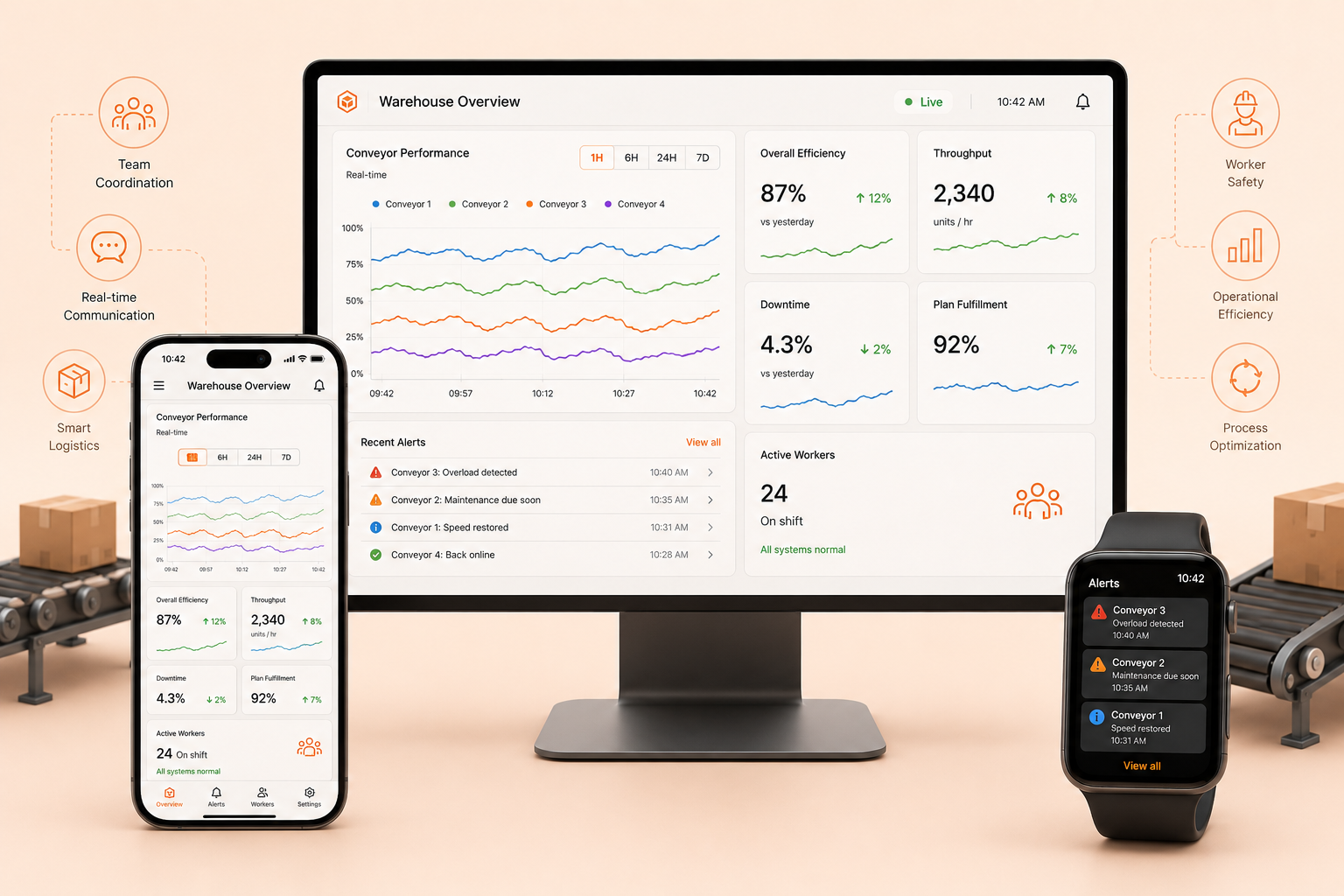
Optimized Warehouse Process Saves 4 Million USD per Annum for a Nation-Wide Logistics Operator
AI-powered warehouse monitoring system with real-time stress detection and worker coordination
AI/ML
Web Development
Infinity Technologies for HORSCH
Automated tracking for 4,000+ supplier components
AI/ML
CRM/ERP
IoT
Mobile Development
Web Development
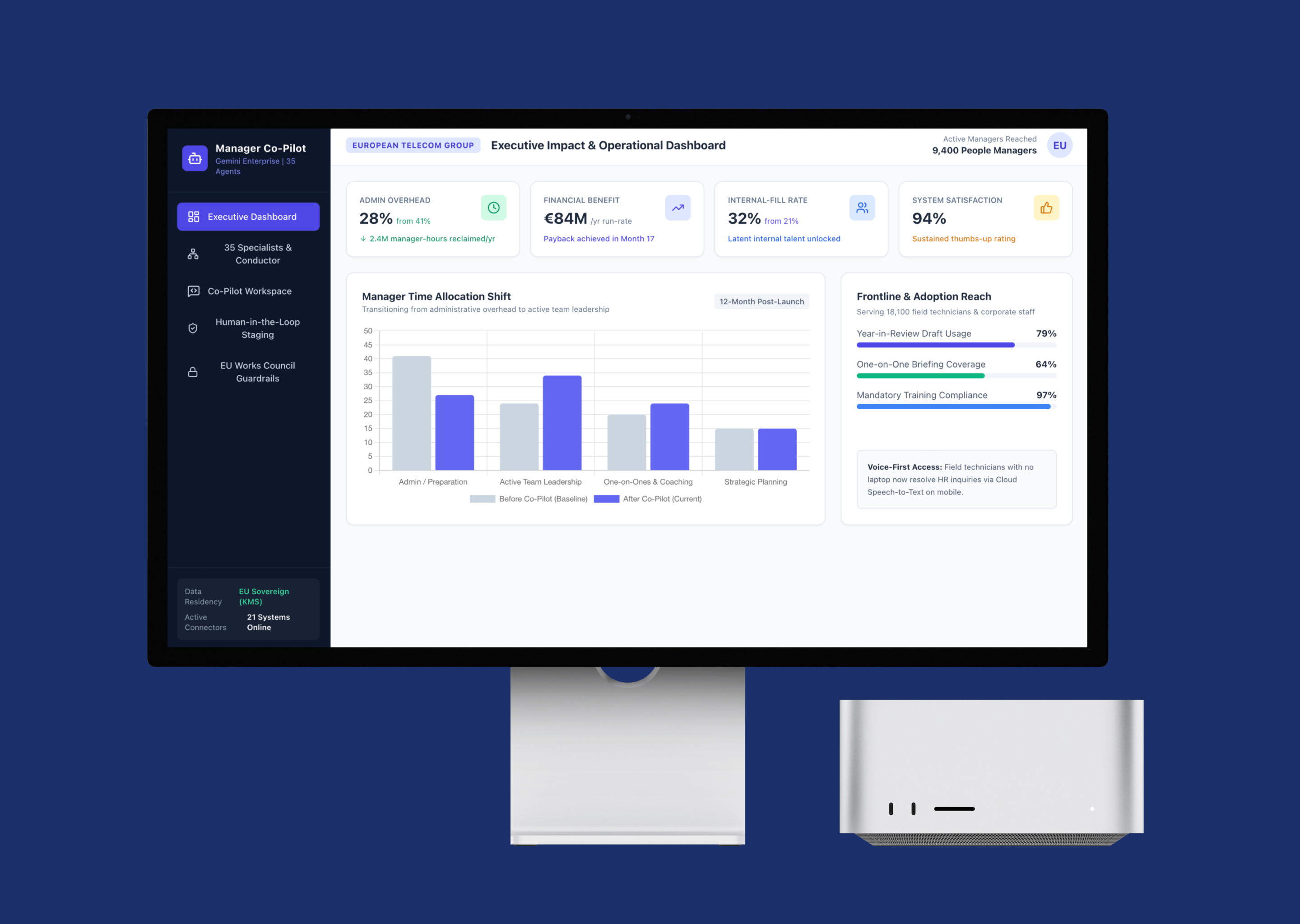
ATLAS Manager CoPilot
AI Co-Pilot helps telecom managers cut admin work and lead teams.
AI/ML
CRM/ERP
Mobile Development
Web Development
AI Recruiting Assistant
AI assistant inside SAP cuts hiring time
AI/ML
CRM/ERP
Project ONIX: AI-Driven Employee Onboarding for a Fortune 200 Oil & Gas Operator
AI onboarding agent streamlines HR for an oil and gas firm
AI/ML
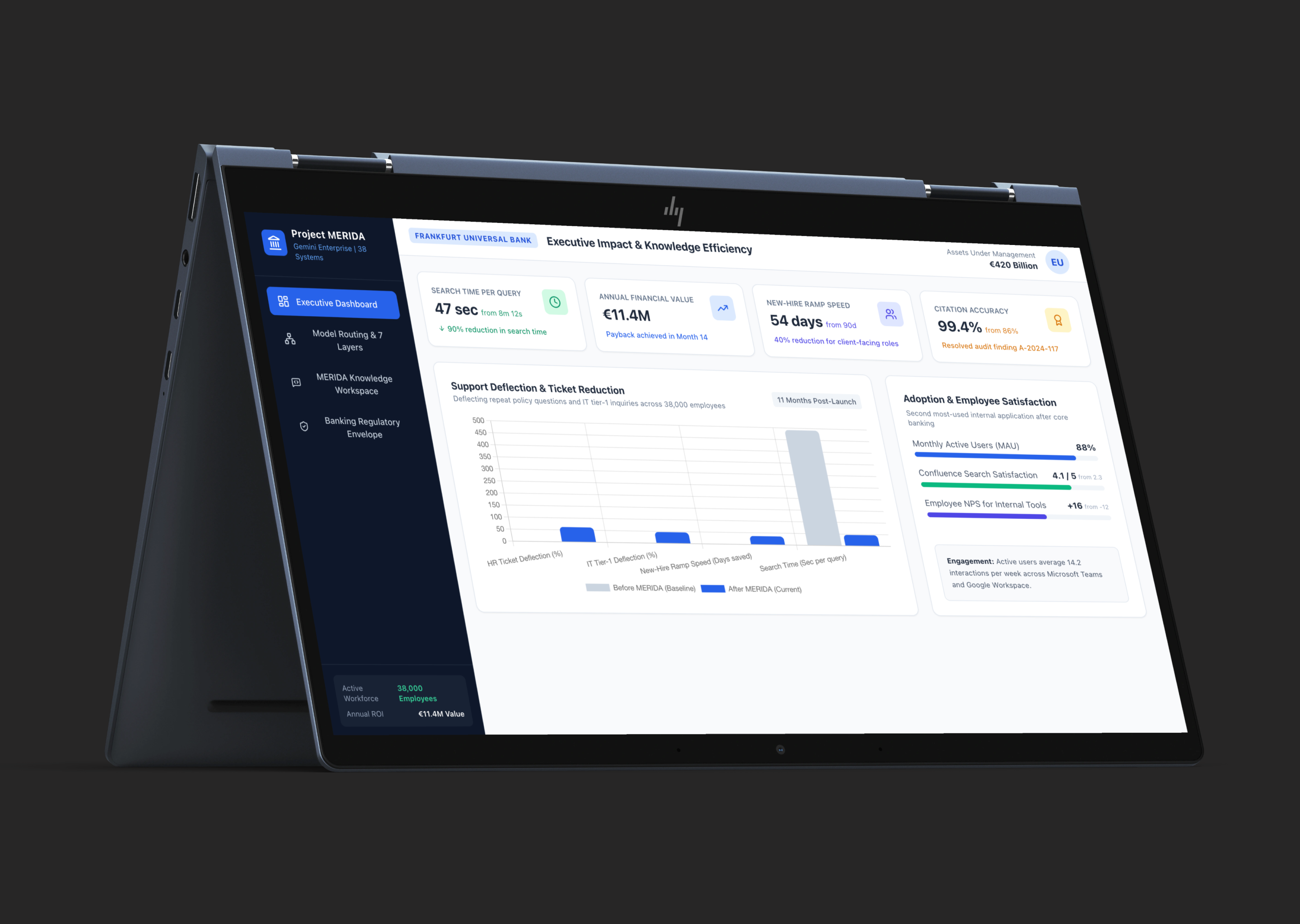
Project MERIDA: An Enterprise Knowledge Assistant for a European Bank
AI knowledge assistant for a European bank
AI/ML
CRM/ERP
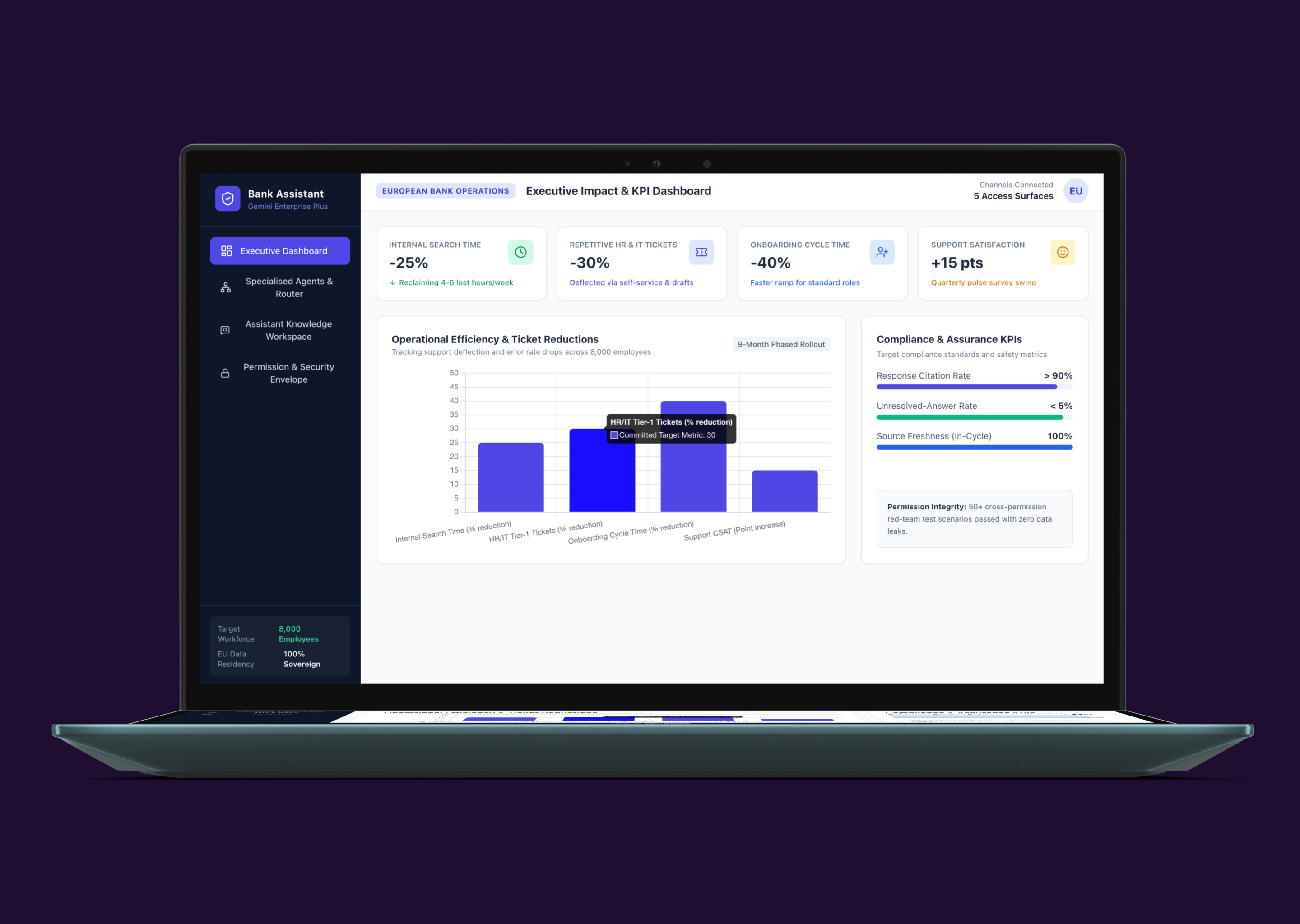
AI Employee Knowledge Assistant
AI assistant for a European bank to centralize internal knowledge
AI/ML
CRM/ERP
Gemini Enterprise Churn Explanation and Retention
AI assistant for churn explanation and retention
AI/ML
CRM/ERP
Gemini Enterprise Call Center Assistant
AI assistant for telemedicine
AI/ML
CRM/ERP
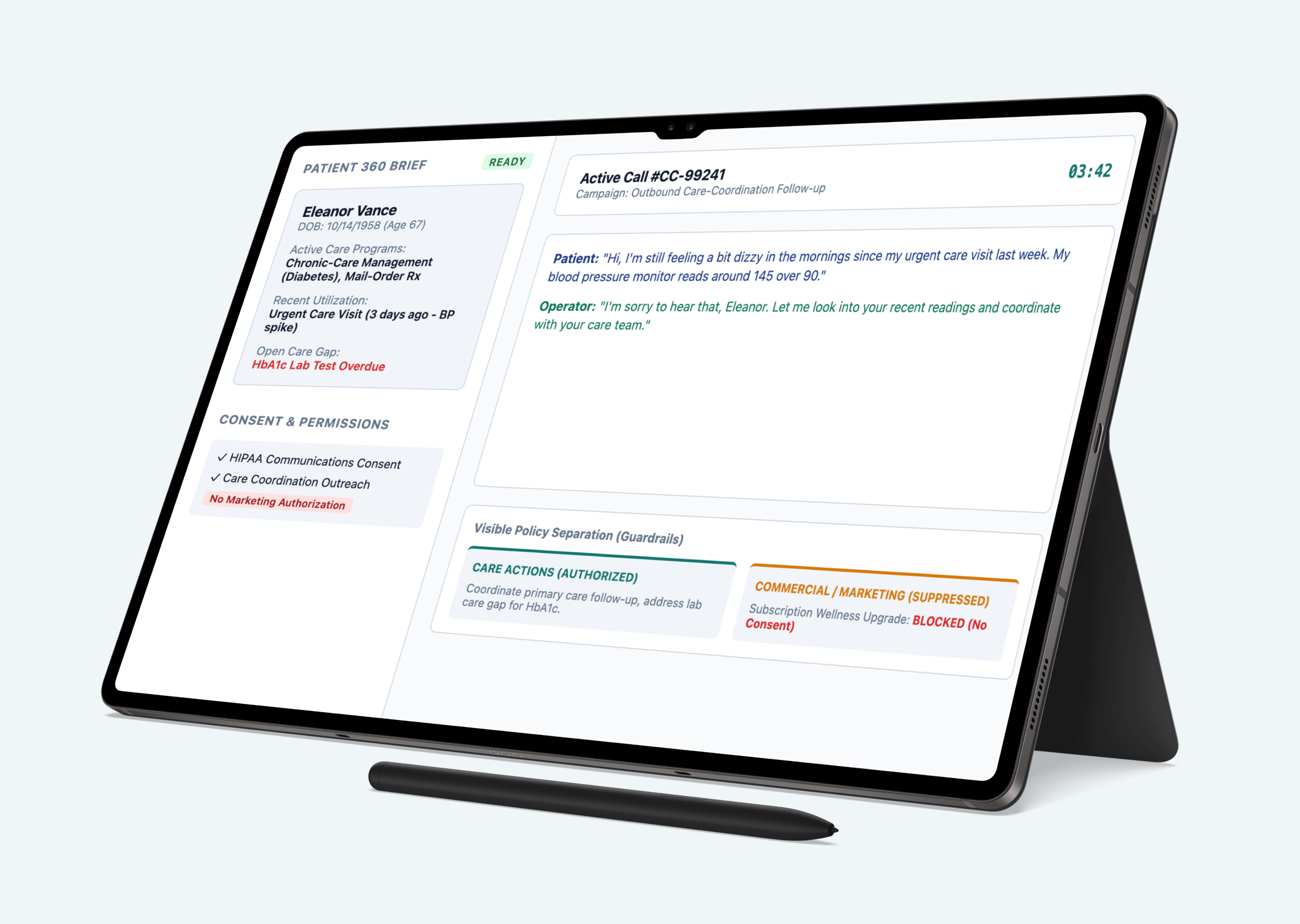
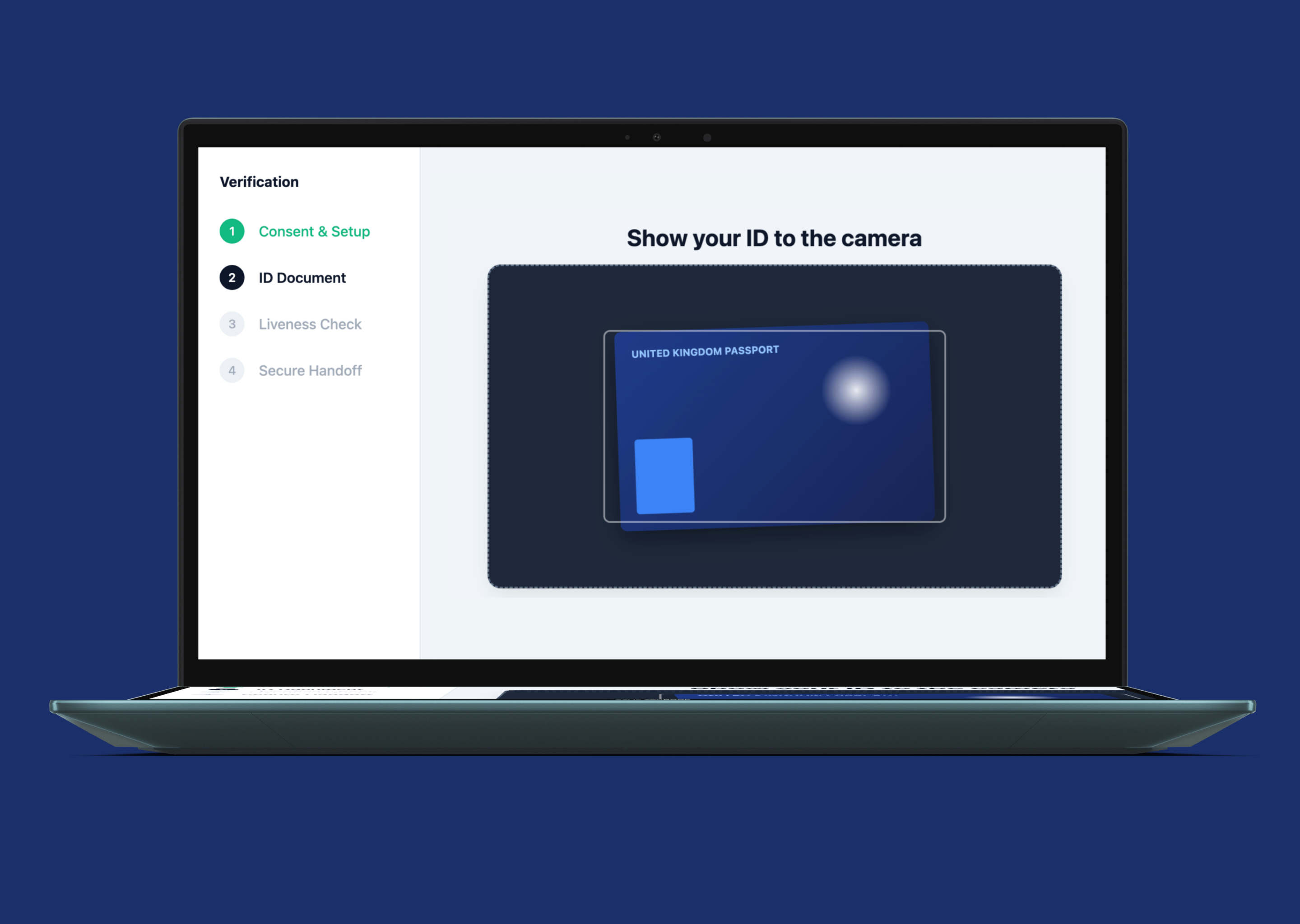
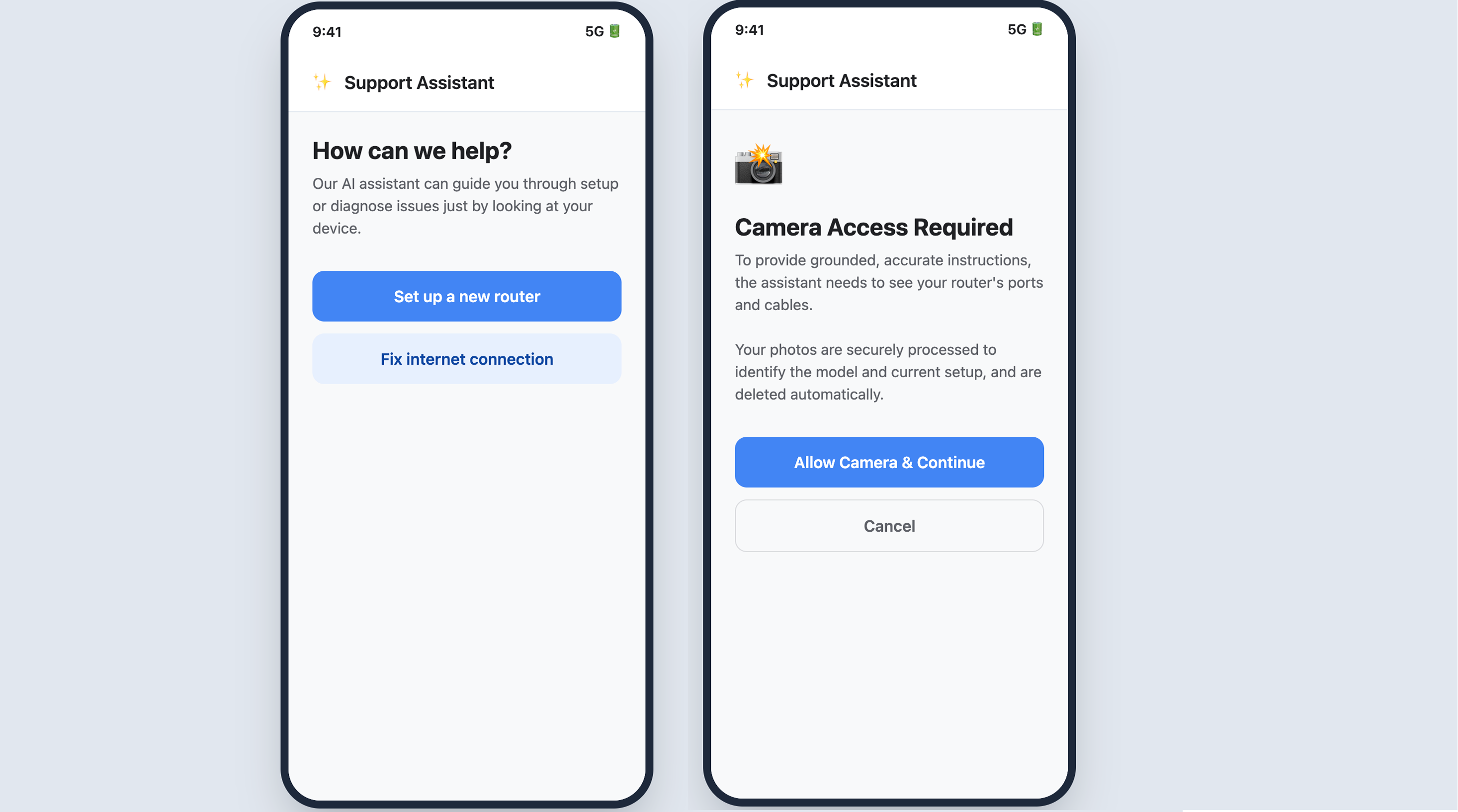
Gemini Enterprise Identity Verification Assistant
AI assistant for KYC to reduce onboarding drop-offs
Micro-stop Monitor detects and classifies short production stops using PLC data and rules
AI/ML
IoT
Web Development
AI Regulatory & Licensing Compliance Copilot
AI copilot for regulatory and licensing compliance across multiple jurisdictions
AI/ML
CRM/ERP
Web Development
AI Due Diligence Platform for M&A and New Projects
AI platform for automated M&A and new project due diligence
AI/ML
CRM/ERP
Web Development
Autonomous Dispatch & BESS AI Optimization
AI engine for portfolio dispatch and BESS optimization across volatile energy markets
AI/ML
IoT
Web Development
AI Asset Health & Degradation Prediction System
AI system for asset health monitoring and degradation prediction
AI/ML
IoT
Web Development
AI CO ₂ Calculator & ESG Impact Platform
AI-powered platform for automated CO₂ accounting and ESG reporting
AI/ML
Web Development
Cross-recipe: Energy vs Quality Analysis
A data-driven system optimized veneer press energy usage while maintaining product quality.
AI/ML
IoT
Feedforward Press Correction
A leading engineered wood manufacturer implemented a predictive press control system powered by data and machine learning.
AI/ML
IoT
Web Development
“Bad-Sheet” Routing
Automated system for detecting and routing defective veneer sheets using real-time sensor data and analytics.
AI/ML
IoT
Early Fan Failure Detection
Plant A deployed an on-prem predictive maintenance system for fans, reducing unplanned downtime by 38%.
AI/ML
Predictive Hydraulic Filter Change
Predictive maintenance system for hydraulic filters reduced downtime and optimized maintenance scheduling in a large industrial plant.
IoT
AI/ML
Infinity Technologies in PetTech
A smart genetic testing platform that helps pet owners and breeders easily access and understand their pets’ DNA insights through a single digital solution.
AI/ML
IoT
Mobile Development
Intelligent Budgeting: How AI-Powered Financial Planning Transforms Business Strategy
A case study on how intelligent budgeting transformed financial planning, decision-making, and organizational agility.
AI/ML
CRM/ERP
Smarter Product Management Through Interactive Constructors and Real-Time Analytics
An interactive, analytics-powered product constructor enabled smarter pricing, faster product decisions, and improved profitability across a complex portfolio.
AI/ML
CRM/ERP
The Power of Precision: How One Company Achieved 99.1% Sales Forecast Accuracy
A large-scale sales forecasting system achieved 99.1% accuracy across hundreds of products using data-driven, automated models.
AI/ML
CRM/ERP
Smarter Energy Forecasting in Manufacturing: Turning Data Into Cost Savings
A real-world case study on how predictive energy forecasting helps manufacturers cut costs and improve efficiency.
IoT
AI/ML
CRM/ERP
Smarter Hatching: How Predictive Modeling Transforms Poultry Incubation
A poultry farm used AI and real-time data to optimize incubation, improving chick quality and operational efficiency.
AI/ML
IoT
Web Development
Predictive Analytics in Healthcare: The Future of Cardiovascular Risk Detection
Predictive analytics model for early cardiovascular risk detection using non-invasive population data.
AI/ML
CRM/ERP
Smart Fraud Detection: How Predictive Analytics is Reshaping Social Welfare Systems
A public agency used predictive analytics to overhaul fraud detection in social welfare distribution.
AI/ML
Risk-Based Oversight of Social Benefits: Catching Fraud Without Hiring More Staff
Case study: shifting from random checks to risk-based fraud detection in social benefits.
AI/ML
Predicting Employee Turnover: How Data Turns Retention into a Strategy
This article explores how predictive analytics is transforming employee retention from a reactive process into a strategic advantage.
AI/ML
IoT
CRM/ERP
How Predicting Customer Churn Helps Banks Grow: A Case Study with 1500% ROI
A real-world case study showing how predictive analytics helped a bank cut churn by 71% and achieve 1500% ROI through targeted retention.
AI/ML
CRM/ERP
Smarter Compliance: How Automated Risk Assessment Transforms Contractor Fraud Detection in Banking
This article explores how automated risk classification enhanced fraud detection and compliance efficiency in banking.
AI/ML
Smarter Loan Campaigns with Predictive Models
How predictive analytics helps banks improve cross-selling by reducing risk, cutting waste, and targeting the right customers.
CRM/ERP
AI/ML
Predictive Modeling Cuts Marketing Costs by 93% in Banking Campaign
A bank applied predictive modeling to identify high-response customers, reducing campaign costs from full budget to just 7% while maintaining results.
AI/ML
Risk-Based Personalization Boosts SME Overdraft Lending
A major European bank revamped its SME overdraft lending by introducing a data-driven model that adjusted loan limits based on individual risk profiles, boosting both portfolio size and profit.
AI/ML
CRM/ERP
August 2025
From 4 Months to 30 Minutes: The New Speed of Credit Scoring
A bank cut credit model time from four months to 30 minutes by automating risk assessment for corporate clients.
AI/ML
Nova Poshta: AI-Powered Warehouse Monitoring for Conveyor Systems
Infinity Technologies Builds Real-Time Load Balancing and Bottleneck Detection for Ukraine’s Largest Logistics Operator

.png)



.png)
.png)
.png)
.png)