The table of content
Introduction
Market Requirements and Competitive Imperatives
In the modern shipping industry, customers require real-time package visibility, intuitive digital interfaces, and self-service capabilities. Logistics companies that deliver these features gain competitive advantages in customer retention and market growth.
Meest Express is an international shipping company that processes high-volume orders across multiple business segments. However, the company's customer dashboard presented significant usability challenges. Customers experienced difficulties viewing and managing orders effectively. The tracking system lacked real-time functionality and clarity. The customer-facing platform did not integrate with the company's main business system (ERP), creating data silos and operational inefficiencies. Additionally, the platform could not connect to major marketplace channels, limiting revenue opportunities and market reach.
These operational deficiencies resulted in customer dissatisfaction and loss of market share to competitors with superior technology infrastructure. s Express recognized that platform modernization was essential to maintain competitiveness and restore operational efficiency.
To address these challenges, Meest Express engaged Infinity Technologies to architect and implement a modern customer platform. The solution needed to provide cross-platform functionality, real-time package tracking, and seamless integration with existing business systems and marketplace infrastructure. This case study documents the modernization initiative and its measurable business impact.
Challenge
Multifaceted Operational Constraints
Meest Express operated in a highly competitive market where platform performance directly influenced customer retention and revenue growth. Several interconnected operational challenges impeded the company's ability to compete effectively.
Outdated Customer Dashboard
The existing dashboard presented significant usability constraints. Customers encountered obstacles when performing basic operations such as shipment creation, order management, and package tracking. The interface design lacked intuitiveness, requiring customers to contact support staff for routine transactions. This dependency on support resources increased operational costs and extended transaction processing times.
Inadequate Real-Time Tracking
The tracking system could not provide real-time package location data. Customers lacked visibility into delivery status and shipment progress. This information gap resulted in customer uncertainty and increased support inquiries, further straining operational resources.
Fragmented System Architecture
The customer platform and main business system (ERP) did not communicate effectively. Customer order information was not automatically transmitted to operations, requiring manual data re-entry. This manual process introduced errors, consumed staff time, and reduced operational efficiency.
Limited Marketplace Integration
The company's ability to expand market reach through major marketplace platforms was constrained by technical incompatibility. The absence of marketplace integration limited revenue channels and customer acquisition opportunities.
These combined challenges created a competitive disadvantage that threatened long-term business viability. Platform modernization was necessary to restore operational efficiency and market competitiveness.
Solution
Comprehensive Platform Architecture
Meest Express partnered with Infinity Technologies to design and implement a comprehensive platform modernization. The solution integrated multiple components to address identified operational challenges.
Dashboard Development
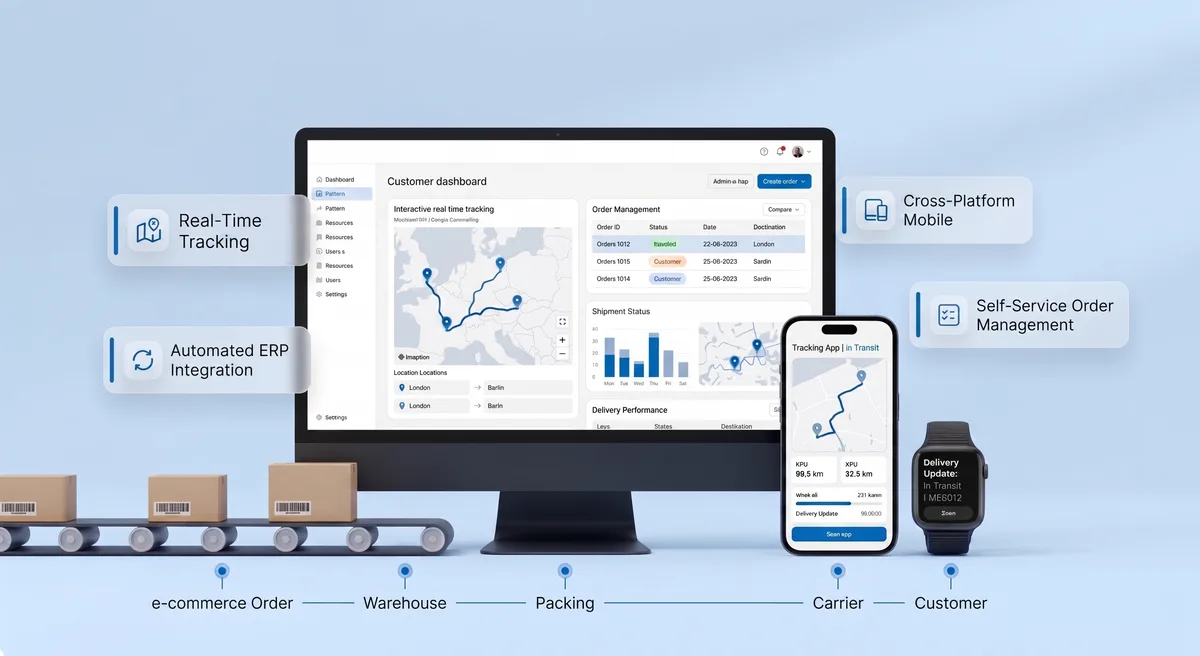
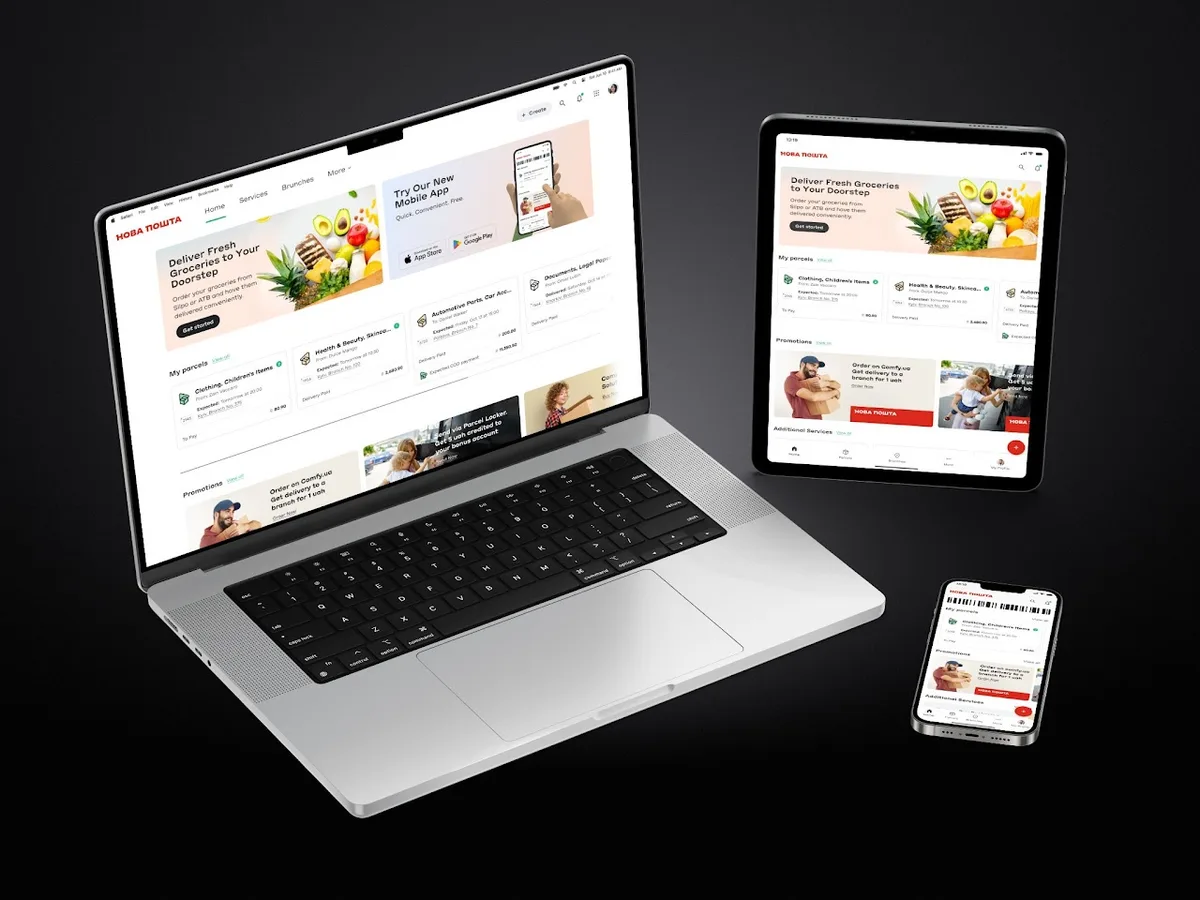
Infinity Technologies designed a new user interface optimized for both mobile and desktop devices. The dashboard enables customers to independently perform key operations including shipment creation, payment processing, label generation, and agreement management. The interface prioritizes ease of use and operational efficiency, reducing dependency on support staff and accelerating transaction processing.
Real-Time Tracking System
A real-time tracking system was implemented using Google Geocoding API and Mapbox-GL technology. The system displays package locations on interactive maps, enabling customers to monitor shipment progress throughout the delivery cycle. This transparency provides customers with accurate delivery status information and reduces support inquiries.
Order Management
The system provides centralized order visibility, allowing customers to view both active and historical orders. Customers maintain complete control over order information and can access records at any time.
ERP Integration
The new platform was directly integrated with Meest Express's main business system. Customer orders now automatically transmit to operations without manual re-entry. This automation eliminates redundant data entry, reduces processing errors, and accelerates order handling.
Marketplace Integration
The platform was connected to major marketplace channels, enabling customers to discover and purchase shipping services directly through existing marketplace platforms. Automated communication between systems ensures seamless transaction processing.
The technical architecture leverages React Native for cross-platform mobile development, OpenStreetMap for mapping infrastructure, and Yii2 for backend operations. This technology selection ensures platform reliability, scalability, and performance under high-volume transaction processing.
Results
Quantifiable Business Improvements
The platform modernization delivered measurable improvements across customer satisfaction, operational efficiency, and business performance metrics.
Enhanced Customer Satisfaction
Customers can now independently manage orders and track packages in real time. Reduced dependency on support staff and increased operational autonomy resulted in improved customer satisfaction metrics. Improved customer experience contributed to increased customer retention rates.
Improved Operational Efficiency
The order delivery process became faster and more transparent. Automated order processing reduced manual data entry and associated errors. Staff resources were reallocated from data entry to core delivery operations. Overall operational efficiency improved substantially.
Streamlined Business Operations
ERP system integration eliminated manual data re-entry processes. Orders automatically transmit from the customer platform to operations teams. This automation reduced processing time, minimized errors, and decreased operational costs. Staff productivity increased through elimination of redundant tasks.
Marketplace Revenue Growth
Marketplace integration expanded customer acquisition channels and revenue opportunities. Customers can now discover and purchase services through established marketplace platforms, increasing transaction volume and market reach.
Competitive Positioning
The modernized platform enhanced the company's competitive position within the logistics market. Improved platform performance and expanded service delivery channels enabled the company to compete effectively with technologically advanced competitors and sustain business growth.
Technology Stack
Integrated Technical Infrastructure
- React Native — Cross-platform mobile development framework enabling single codebase deployment across iOS and Android platforms, reducing development time and maintenance costs.
- OpenStreetMap — Open-source mapping infrastructure providing geographic data for package location visualization and delivery route mapping.
- Mapbox-GL — Interactive mapping library enabling real-time, responsive map display on mobile and desktop platforms with support for zoom and navigation functionality.
- Google Geocoding API — Geolocation service converting addresses to precise coordinates and coordinates to addresses, enabling accurate package location mapping.
- Yii2 — PHP framework providing backend system architecture for data management, database operations, and business logic implementation.
The integrated technology stack supports high-volume transaction processing, real-time data synchronization, and reliable system performance across multiple platforms.
Conclusion
Strategic Value of Platform Modernization
The Meest Express modernization project demonstrates the strategic value of customer platform modernization in logistics operations. The company addressed significant operational challenges through systematic technology implementation and architectural redesign. Platform deficiencies in usability, tracking functionality, and system integration were comprehensively resolved.
The modernized platform enables customers to perform self-service operations, access real-time package information, and complete transactions through multiple channels. Operational efficiency improved through automated processes and system integration. The platform's expanded functionality and improved reliability enhanced the company's competitive positioning.
Key outcomes include improved customer satisfaction metrics, reduced operational costs, increased transaction processing efficiency, and expanded market reach through marketplace integration. The modernization initiative directly contributed to improved business performance and sustainable competitive advantage.
For logistics operators confronting similar operational challenges, this case study demonstrates the business case for comprehensive platform modernization. Strategic investment in modern technology infrastructure, customer-centric system design, and integrated operations delivers measurable returns through improved efficiency, expanded market reach, and enhanced competitive positioning. The results substantiate the value of modernization as a core business strategy in competitive logistics markets.


Our success stories





































Tell us about your project needs